
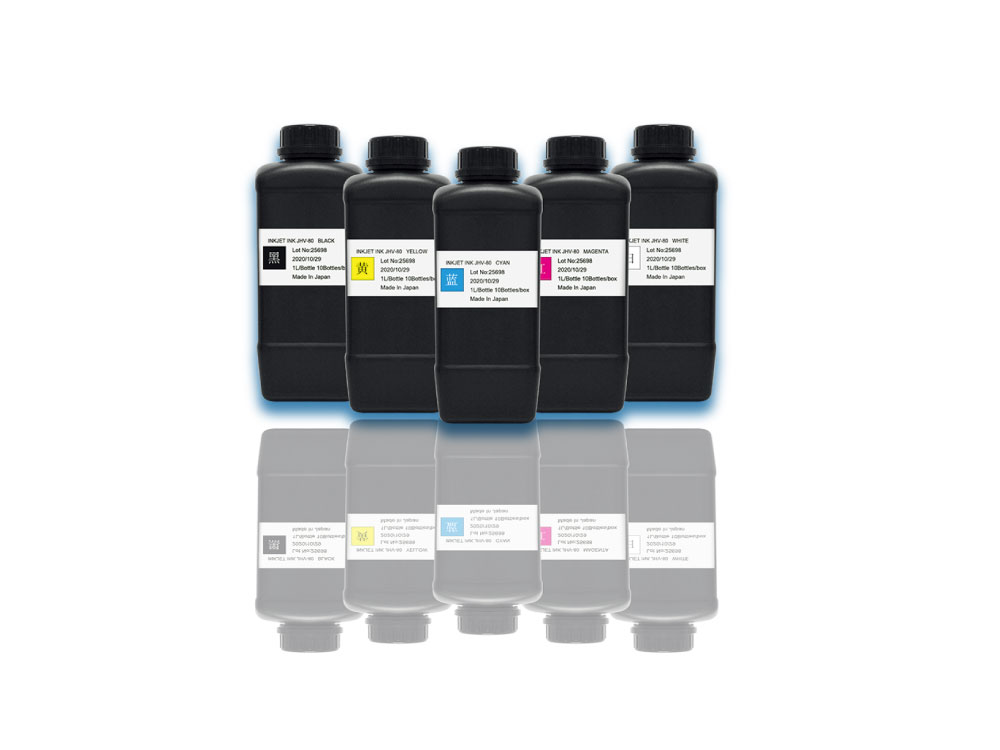
An inkjet printhead is a highly integrated microfluidic device that converts ink into micro-droplets and ejects them accurately onto materials (paper, fabric, plastic, metal, etc.). It integrates hundreds to thousands of microscopic nozzles (diameter ~10–20 μm, 1/10 of a human hair) and precision drive circuits.
Printheads
SELFRESEARCH OF INK
Inkjet printheads are the core components of inkjet printing systems, which eject tiny ink droplets (picoliter-scale) precisely onto substrates via thermal or piezoelectric mechanisms. They determine print quality, speed, and resolution, widely used in office, commercial, and industrial printing (e.g., textile, packaging, PCB, 3D printing).

Inks for the glass industry
Ink for lithium battery industry
PCB ink
Resistant to alcohol, butanone, high temperature, high humidity, electricity, oil ink
PE ink
Super black ink
Special colour ink
Definition & Core Function
Core Technologies (Working Principles)
(1) Thermal Inkjet (TIJ / Bubble Jet)
- Mechanism: A resistor heats ink instantly (μs) to form vapor bubbles; bubble expansion pushes droplets out of nozzles.
- Features: Low cost, simple structure; limited to water-based/dye inks; lower durability due to thermal stress.
- Brands: HP, Canon, Lexmark.
(2) Piezoelectric Inkjet (Piezo / DOD)
- Mechanism: Voltage deforms piezoelectric ceramics, generating pressure pulses to eject droplets (no heat).
- Features: Compatible with diverse inks (solvent, UV, pigment, oil); high durability, fine droplet control, variable drop size (grayscale).
- Brands: Epson, Ricoh, Konica Minolta.
(3) Continuous Inkjet (CIJ)
- Mechanism: Continuously generates droplets; charged droplets are deflected to substrate, uncharged ones recycled.
- Features: Ultra-high speed, ideal for industrial coding/marking (e.g., date, batch number).
Key Performance Parameters
- Nozzle Count: 100–21,000 nozzles (industrial high-end).
- Droplet Size: 1–20 picoliters (pL); smaller drops = higher resolution.
- Resolution: 300–2400 DPI (dots per inch).
- Frequency: 20–150 kHz (droplets per second per nozzle).
- Ink Compatibility: Water-based, solvent, UV-curable, pigment, dye, conductive silver paste, cell suspension, etc..
Application Areas
(1) Office & Commercial Printing
- Scenarios: Home/office printers, copiers, photo printing, advertising billboards, banners, light boxes.
- Features: High resolution, color accuracy, low cost for small batches.
(2) Industrial Digital Printing
- Textile Printing: Cotton, polyester, silk; UV/pigment inks, high-speed roll-to-roll printing.
- Packaging & Labeling: Food/medicine packaging, QR codes, barcodes, batch coding (CIJ).
- Ceramic & Glass: Tile patterns, glass decoration, glaze inkjet.
- PCB & Electronics: Circuit traces, solder mask, conductive ink printing; high precision (μm-level).
(3) Advanced & Emerging Applications
- 3D Printing / Additive Manufacturing: Photopolymer, ceramic, metal inkjet for micro 3D structures.
- Bioprinting & Life Sciences: DNA microarrays, cell printing, drug screening, biosensors.
- Flexible Electronics: OLED, RFID tags, flexible circuits, solar cell coatings.
- Photovoltaic: Perovskite solar cell layer printing, wafer marking.
Online Message
We would be glad to help you find the best coding and marking solution to fit your requirements.
