From Paper Labels to Permanent UV Printing, How We Achieve ≥99.95% Reliability
The Revolution of In-Glass Printing for PV Modules reshapes traceability workflows for solar factories.The Revolution of In-Glass Printing for PV Modules reshapes traceability workflows for solar factories.The photovoltaic industry has entered a new phase featuring large-scale production, long service life and full-chain traceability. Against this industry backdrop, in-glass marking for PV modules, enabled by permanent UV in-glass printing technology, is gradually replacing paper labels and becoming the standardized traceability solution adopted by leading PV manufacturers.
Pain Points of Traditional Paper Label Marking Solutions for PV Modules
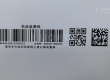
Paper labels were the mainstream traceability marking solution in the early PV industry. Batch codes, QR codes and module parameters are printed on PET or paper adhesive substrates, then manually attached to the outer surface of PV glass to realize full-process data tracking during module production, warehousing and power plant operation & maintenance.
This full workflow relies on four major consumables and procedures: label stock, thermal ribbons, labeling machines and manual labeling stations, yet it comes with inherent critical drawbacks:
- Poor weather resistance: Adhesive aging, label curling and peeling occur within 2–5 years of outdoor exposure. Graphics and codes fade and blur under high humidity, salt spray, intense UV radiation and alternating high-low temperature cycles.
- High physical damage risk: Labels are easily scratched during lamination, transportation and cleaning, leading to unreadable codes and failed scanning.
- Severe human error risks: Misaligned, missing or duplicated labels trigger production defects and broken traceability chains.
- High long-term overall consumable costs: Continuous consumption of labels, ribbons and lamination films, plus complicated inventory management.
Concept of Permanent UV Printing for PV Glass
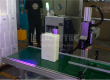
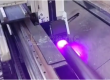
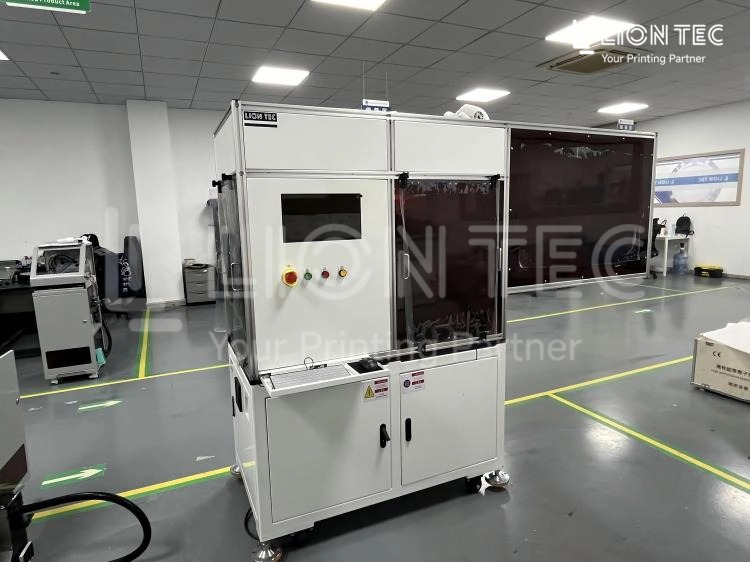
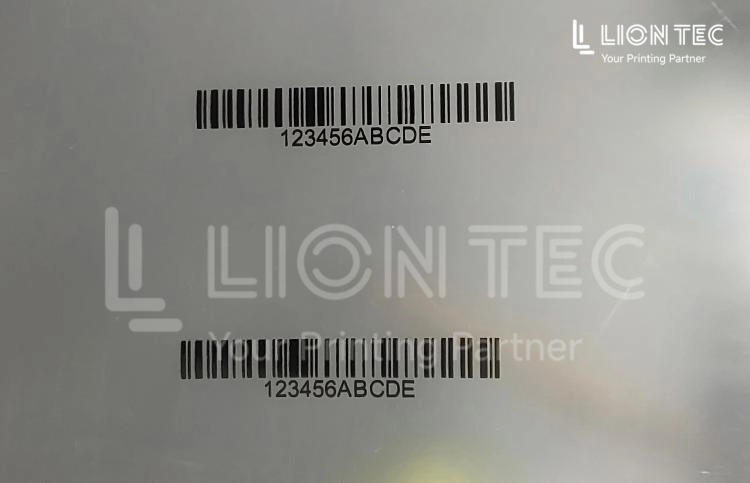
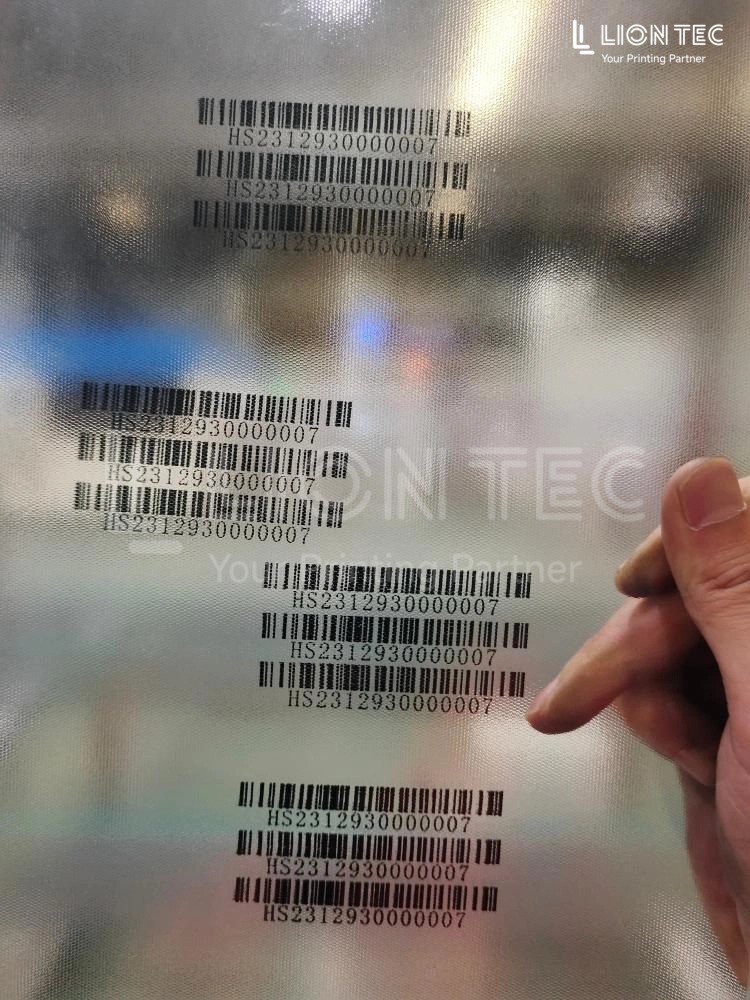
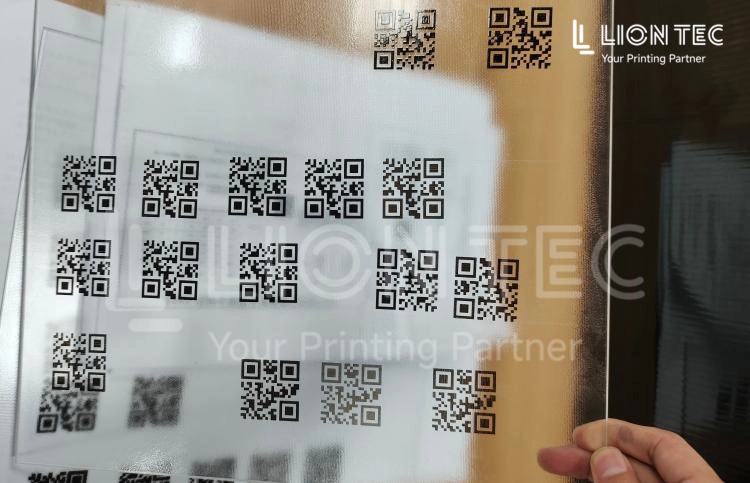
PV glass internal UV printing is an embedded marking process developed for large-size photovoltaic glass, serving as a label-free digital traceability solution. Using industrial piezoelectric UV inkjet printers, nano UV curable ink is mirror-printed onto the inner surface of PV glass (inside the encapsulation layer). After millisecond-level curing by LED UV light, the marks are permanently sealed inside the module and integrated with the glass substrate, replacing external paper labels to realize full-lifecycle traceability.
- The printed marks sit inside the glass. After encapsulation, they are isolated from external moisture, sand, wind and UV radiation, free from environmental corrosion.
- Permanent UV printing adopts special glass-adhesive nano UV ink, which forms a dense cross-linked film after curing, reaching Class 0 adhesion under the cross-hatch test standard.
- ≥99.95% reliability: After full PV reliability tests including DH2000 damp heat (85℃/85%RH), UV500 accelerated UV aging and thermal shock cycles, the stable scanning recognition rate stays above 99.95%, matching the 25-year design service life of PV modules.
Core Advantages of Switching to Permanent UV Printing Inside PV Glass
- Greatly reduced long-term production and operation costs
- Stable and controllable full-lifecycle traceability to avoid compliance risks
- Higher overall module yield rate and less production scrap
- Eco-friendly production that meets the industry’s low-carbon & environmental standards
Conclusion
Our UV printing printers support full compatibility with all mainstream PV glass production lines, enabling stable variable data marking for mass component batches.
The shift from paper labels to permanent UV printing for PV glass marking represents an inevitable trend toward digitalization and long-term durability across the photovoltaic industry. The ≥99.95% stable reliability is not achieved by a single printer, but through the coordination of a full set of standardized processes including glass pre-treatment, special UV ink, precision printing, full-spectrum curing and inline full inspection.
For PV module manufacturers, deploying glass UV printing solutions cuts long-term production and operation costs and thoroughly eliminates the pain points of outdoor marking failure and broken traceability chains. It caters to the long-term development demands of next-generation PV products such as double-glass modules, TOPCon and perovskite cells.