Industrial vs Consumer Printheads, Is the Price Gap of Thousands Worth It?
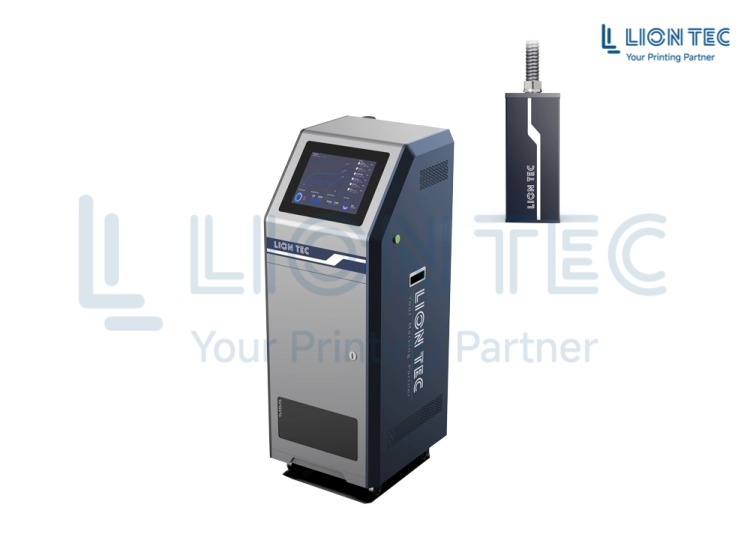
The Core of UV Inkjet Printer.UV inkjet printers rely on piezoelectric printheads to precisely eject UV curable ink onto various product surfaces, completing printing tasks such as production dates, traceable QR codes, logos and specification marks.
The printing precision, continuous production stability, consumable loss and long-term operating costs of the whole machine are all determined by the printhead. Once the printhead malfunctions, the entire production line will shut down immediately.
Core Issues of Printheads with Different Price Tiers
1. For small-batch manufacturers with only 4 hours of daily production, is cheap consumer-grade printhead a more cost-effective choice?
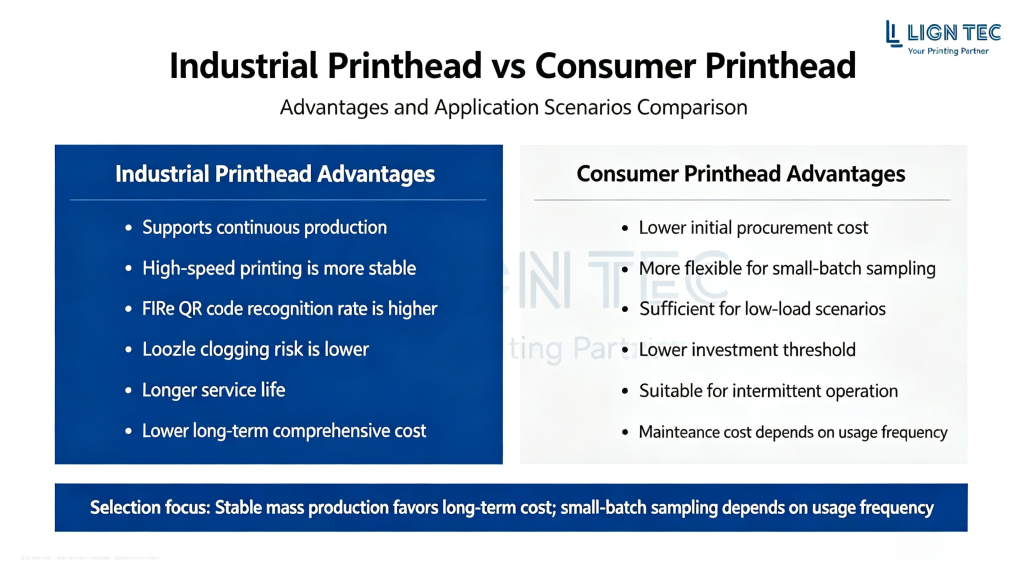
It seems to save money in the short term, yet brings higher overall long-term operation costs.
UV ink tends to precipitate and crystallize. Consumer-grade printheads lack an internal ink circulation system, so nozzle partial clogging frequently occurs during idle periods and intermittent production, requiring repeated deep manual cleaning every week. Frequent clogging leads to massive rejected products and wasted UV ink, plus labor and downtime losses. Moreover, consumer printheads need full replacement every 1–1.5 years, meaning 2 to 3 replacements within 2–3 years. When factoring in waste, consumables and production downtime, the total expense will exceed the price gap of a single industrial printhead purchase. If the factory expands production or extends daily operating hours later, consumer printheads cannot adapt to assembly lines, requiring full printhead module replacement and extra secondary renovation costs.
2. Both can print clear QR codes, so what are the differences in printing performance between industrial and consumer printheads?
Their static sample printing results look similar, but gaps become obvious under high-speed inline dynamic printing.
- Both printheads deliver crisp 600DPI graphics and texts for static offline sampling, yet the performance gap widens drastically in high-speed moving inline printing.
- Industrial printheads feature adaptive variable droplet adjustment, delivering burr-free edges and uniform QR code grayscale at high motion speeds, with a stable scanning recognition rate above 99.9%.
- Consumer printheads have a narrow droplet adjustment range. They tend to produce faint edges and broken lines on fast production lines, raising the scanning failure rate of tiny traceable QR codes by 8%–15%. This creates compliance risks for medical device and 3C electronics UDI traceability applications.
- Industrial printheads adopt negative pressure anti-leakage design, preventing ink drips and workpiece contamination during line startup, shutdown and standby. Consumer printheads have no negative pressure protection, and ink dripping often causes batch product rejection.
Core Advantages of Industrial-Grade Printheads
1. Greatly cut production line downtime & boost overall throughput
Industrial printheads come with a built-in continuous ink circulation system, lowering nozzle clogging probability by over 75%. No frequent line halts for daily cleaning are required. They support two-shift and 24/7 non-stop assembly line operation, perfectly matching high-speed automated production lines. Under the same production hours, output capacity rises by 30%–50%, effectively easing order delivery pressure during peak seasons.
2. Lower comprehensive long-term cost & avoid hidden loss expenses
Though the upfront purchase cost is tens of thousands higher, the ultra-long service life of 3–5 years cuts printhead replacement frequency. Stable ink output reduces ink waste and defective products, saving labor costs for rework and raw material losses from rejects. Frequent maintenance stops are eliminated, minimizing delayed order losses caused by line shutdown. Large-scale factories can recover the extra printhead cost within 2 years.
3. High-standard printing on diverse materials to meet industrial compliance standards
The full stainless steel printhead base plate delivers strong corrosion resistance, compatible with hard-to-adhere substrates including metal, plastic, silicone, glass and medical consumables. It maintains consistent printing texts and traceability codes, complying with inspection standards for medical device UDI, 3C electronics traceability, food packaging marking and more. It avoids failed product sampling inspections caused by printing defects.
4. Simplify daily maintenance & lower operation technical barriers
Industrial printheads integrate factory-built automatic cleaning, moisturizing and negative pressure protection all-in-one system, requiring only 5 minutes of basic daily maintenance. Consumer-grade printheads demand manual disassembly cleaning and frequent filter replacement, with higher professional requirements for operators. Small and medium-sized factories can cut labor costs for dedicated equipment maintenance staff.
Conclusion
The price gap of tens of thousands between printheads for UV inkjet printers is not a markup by manufacturers, but a hardware gap in stable mass-production performance, service life and compliant printing capability.
Consumer-grade printheads can serve as a temporary transition solution for short-term small-batch intermittent sampling tasks.
However, if your factory has steady bulk orders, automated production lines and high-standard marking traceability requirements, the advantages of industrial-grade printheads — fewer defective products, less downtime and longer service life — will fully offset the higher upfront purchase cost. They are the core choice for factories to cut costs and boost efficiency in the long run.