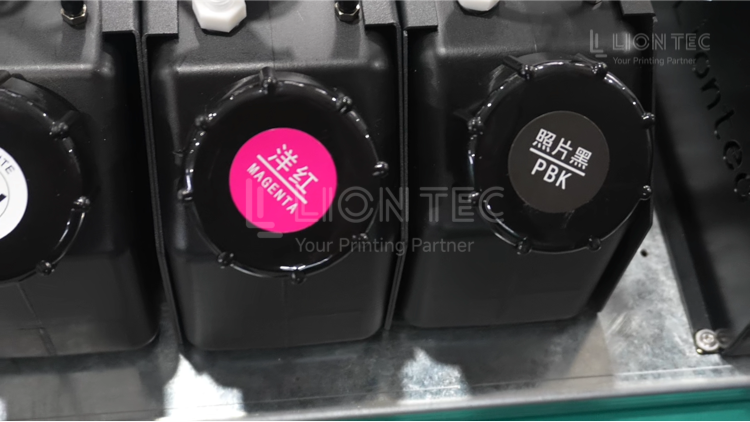
In the field of industrial marking, ink selection for UV Inkjet Printer directly determines printing quality, durability and production line efficiency. This article, Recommendation on Selection of UV Inks, systematically sorts out ink selection ideas and solutions by covering ink colors and functional types.Reasonable UV ink matching can effectively avoid common industrial marking problems such as blurred codes, poor adhesion, easy fading, and printhead blockage, ensuring long-term stable operation of LIONTEC UV Inkjet Printer on various automated production lines.
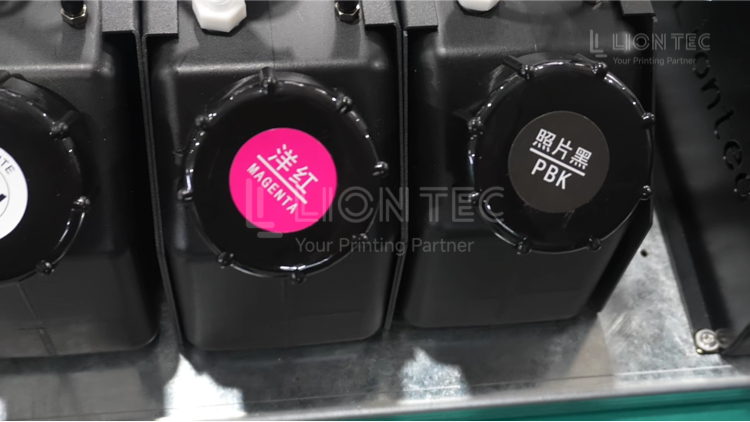
Ink Color & Functional Ink Selection
I. Collect Basic Product Information and Define Constraints
- Substrate type (PET/PP/PE/Metal/Glass/Flexible Film), substrate surface condition (release agent, lamination, oil contamination), production line speed, and subsequent processes (bending, spraying, high-temperature sterilization, alcohol wiping, cold storage).
- Clarify marking purpose: ordinary batch number / QR code / anti-counterfeit secret code.
II. Select Functional Ink Category First, Then Ink Color
- Prioritize ink function based on substrate and post-process. Choose hard high-adhesion ink for rigid substrates.
- Flexible ink for flexible films and bendable products.
- Special low-surface-energy ink for PP/PE low-surface-energy materials.
- Fluorescent invisible ink for anti-counterfeiting and traceability requirements.
- After confirming the functional series, select ink color according to substrate base color: black ink for light-colored substrates, white ink for dark substrates, red/yellow/blue color ink for classification marking.
III. Sample Printing and Multi-dimensional Test Verification
- Use actual production substrate samples for test marking by the equipment supplier. Conduct a full set of tests after curing: cross-hatch adhesion test, alcohol rubbing test, bending test, temperature resistance test, and barcode/QR code readability test.
- Record curing lamp power and printing speed parameters, and reserve samples as acceptance criteria.
IV. Verify Compatibility of Ink with Printhead and Circulation System
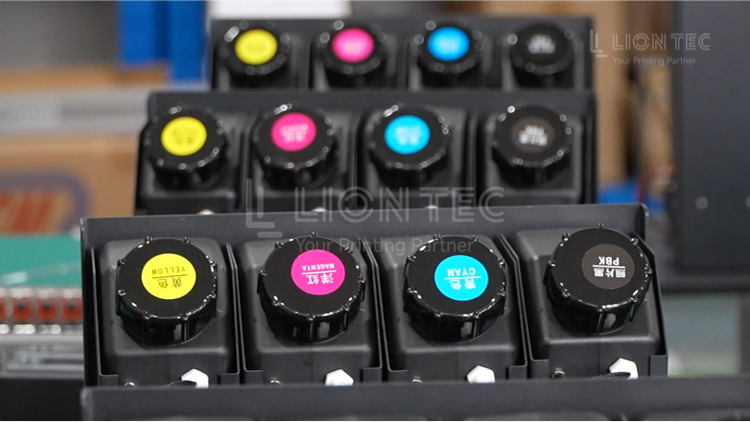
- Confirm that the ink matches the printhead model of the machine, and check whether ink viscosity and pigment particle size are compatible with the equipment’s circulating ink supply system.
- Verify that the wavelength of the UV curing lamp matches the ink photoinitiator system. Insufficient curing will result in poor adhesion and tacky surface.
V. Define Specifications for Storage, Pipeline Cleaning and Daily Maintenance
- Confirm ink storage conditions (light-shielded, constant temperature), and establish ink replacement and cleaning procedures.
- Complete small-batch trial production before formal production line launch. Run continuously for 2~8 hours to monitor printhead condition and marking quality. Mass production can start only if no abnormalities are found.
Advantages of Proper Ink Selection
1.Improve production line stability and reduce downtime maintenance costs
Proper matching among ink, printhead, curing lamp and substrate minimizes printhead clogging, ink breakage and ink leakage failures. It greatly cuts down production line downtime and cleaning & maintenance frequency, ideal for continuous production lines, and reduces consumable waste and labor hours.
2.Stabilize marking quality and lower product scrap rate
The matched ink delivers qualified adhesion after curing, with excellent resistance to friction, solvents, high and low temperatures. It prevents marking peeling, blurring and QR code reading failure, reducing rework and scrap of whole batches caused by unqualified marks. The benefit is prominent for high-value products such as auto parts, electronics and pharmaceutical packaging.
3.Meet industry compliance and expand product application scenarios
Select low VOC, food-contact grade and RoHS-compliant ink as required to satisfy audit standards for pharmaceutical, food and export products, and avoid risks from environmental inspections and export customs checks. Anti-counterfeit invisible ink can also build up product traceability and anti-counterfeiting systems.
4.Controllable long-term overall consumable cost
Well-selected ink eliminates frequent replacement of pretreatment primer and reduces auxiliary consumables. The printed marks are durable and stable without secondary reprinting. From a full-lifecycle perspective, it is more cost-effective than low-priced mismatched ink.
Conclusion
Selecting UV printing ink is not simply about picking colors. The core lies in the full matching of substrate, ink, printhead and curing process.