UV Ink vs Solvent Ink vs Water-based Ink
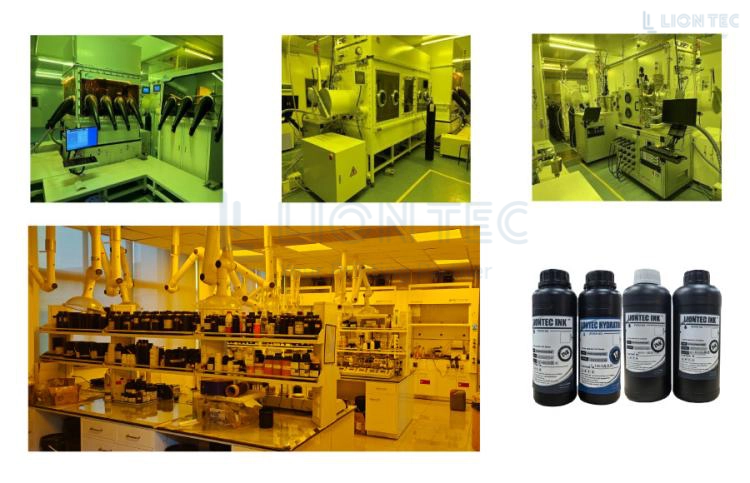
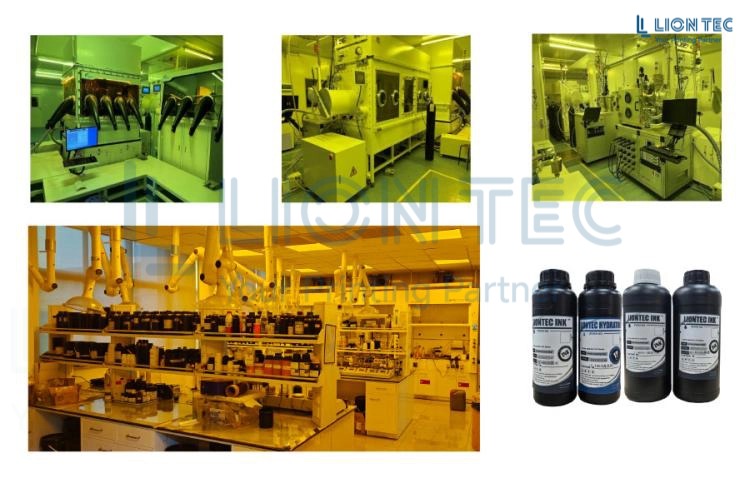
As an original manufacturer specializing in industrial inkjet and coding equipment, LIONTEC has long served manufacturing sectors including food packaging, electronics 3C, medical devices, auto parts and building materials. Our most widely supplied consumable products are three types of professional industrial Coding Inks: UV ink, solvent ink and water-based ink. Their core differences lie in carrier composition, curing methods and applicable substrates.
Core Definition of Coding Inks
1. UV Coding Inks
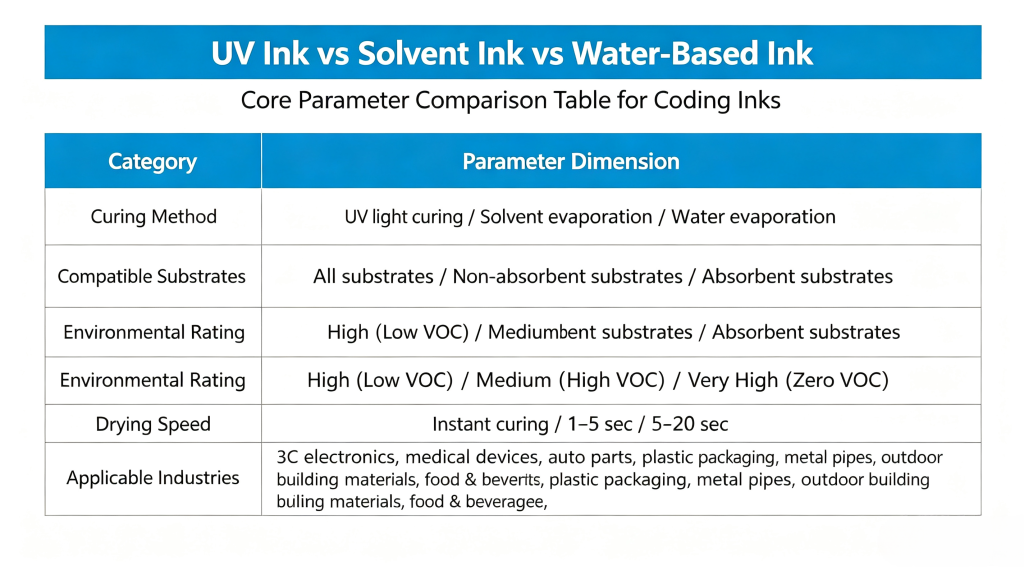
Advantages:Ultra-fast curing speed, strong adhesion on most substrates, hard ink film with excellent resistance to friction, alcohol and acid & alkali. Prints remain colorfast outdoors long-term with ultra-low VOC emissions complying with global environmental regulations. It supports continuous high-speed production line coding and delivers consistent clarity for QR codes and tiny characters.
Disadvantages:Higher procurement cost for the ink; coding devices must be equipped with UV curing lamp modules, leading to higher upfront equipment investment than standard printers. Ink layers tend to crack on some soft elastic substrates, calling for customized flexible UV Coding Ink formulas.
2. Solvent Coding Inks
Advantages:Moderate drying speed, stable adhesion on non-absorbent plastics and metals with balanced weather resistance. The ink resists solidification under low temperatures and works well with legacy coding machines. It offers high print yield per liter and controllable mid-range production costs.
Disadvantages:Continuous VOC emissions during production require ventilation and explosion-proof facilities in workshops. High-concentration solvents may generate mild irritating odors, restricting usage in cleanrooms for food and pharmaceutical industries. Fading and ink film pulverization often occur after 3–5 years of outdoor exposure.
3. Water-based Coding Inks
Advantages:Odor-free with near-zero VOC and non-flammable properties, meeting compliance standards for food-contact applications and pharmaceutical GMP cleanrooms. Low ink cost plus easy equipment maintenance; printheads and ink paths can be cleaned simply with water. It penetrates firmly into absorbent materials such as paper, corrugated cartons and non-woven fabrics for soft, uniform color rendering.
Disadvantages:Only compatible with absorbent substrates; prints fade easily on laminated films, glass and metal surfaces. Slow drying limits its use to low-speed production lines, causing trailing smudges at high speeds. Printed marks bleed easily in humid storage conditions with poor water resistance.
Benefits of the Three Types of Coding Inks
1. Avoid environmental penalties and meet industrial compliance standards
Proper selection of Coding Inks enables source control over VOC emissions. Water-based and UV Coding Inks are applicable to clean workshops for food and pharmaceutical production without the need for large explosion-proof ventilation systems. For export manufacturers, UV Coding Inks comply with global environmental laws, preventing cargo detention by customs and fines or rectification orders from environmental authorities. In the automotive parts and electronics industries, UV Coding Inks satisfy RoHS hazardous substance regulations and pass access audits for upstream and downstream supply chains.
2. Cut production line downtime losses and boost overall productivity
Improper ink selection commonly leads to nozzle clogging, ink smearing and label peeling that trigger rework. Water-based inks on plastic substrates will cause mass reprinting; solvent inks dry slowly on high-speed lines and result in code adhesion between products. UV Coding Inks feature instant curing and fit high-speed assembly lines running at over 100 meters per minute. Matching the three Coding Inks to corresponding substrates reduces failures including nozzle blockage and defective prints by more than 70%, lowering costs for consumables and manual rework.
3. Stabilize long-term overall production costs and extend the service life of coding equipment
Many factories only focus on the unit price of ink while ignoring hidden costs. Solvent Coding Inks require regular replacement of ventilation consumables and dedicated thinners for equipment cleaning. Water-based Coding Inks are only suitable for paper materials, meaning multiple devices are required for multi-material production lines. Though UV coding equipment demands higher upfront investment, it features corrosion-resistant ink circuits and less nozzle wear, with a single unit compatible with all types of substrates. When selected for specific application scenarios, the combined costs of equipment maintenance, consumable replacement and rework labor can be reduced by 20% to 40%.
Conclusion
There is no absolute superiority or inferiority among UV Coding Inks, solvent Coding Inks and water-based Coding Inks. Their matching shall be comprehensively determined from four dimensions: substrate type, production line speed, environmental compliance and actual application scenarios.
In accordance with the actual production conditions of manufacturers across various industries, LIONTEC delivers one-stop supporting services free of charge, including substrate sample testing, Coding Ink selection schemes and coding equipment matching. We help enterprises avoid troubles caused by improper ink selection such as product rework, environmental non-compliance and excessive equipment loss, and assist manufacturers in building stable, low-cost and fully compliant industrial coding & marking production lines.