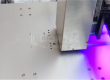
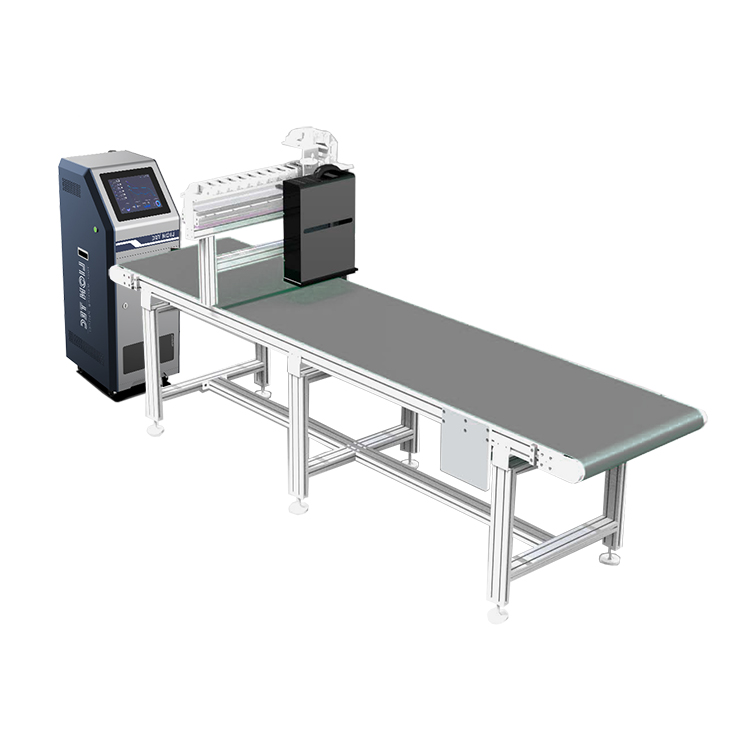
Working Principle of UV inkjet printer are industrial marking equipment built upon two core technologies: DOD Drop-on-Demand Piezoelectric Inkjet Technology and UV Photocuring Reaction.
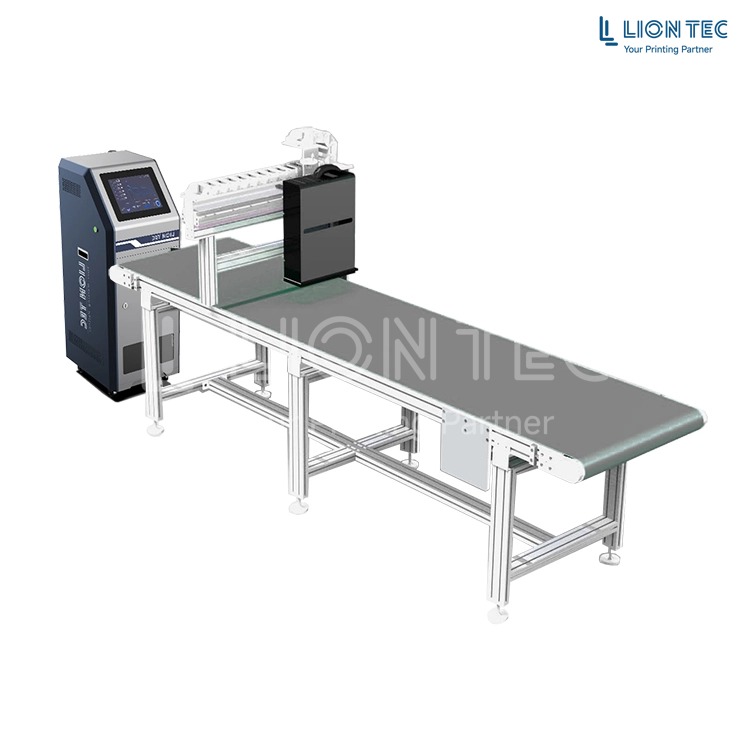
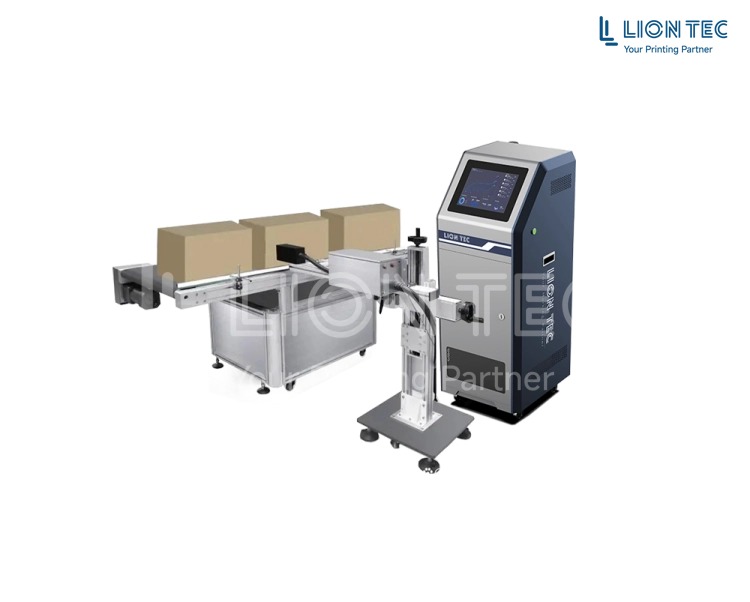
As a manufacturer of industrial inkjet printing equipment, LIONTEC machines consist of four core assemblies: printing control system, piezoelectric printhead module, UV-LED curing light source and ink supply system.
The complete workflow covers three stages: precise piezoelectric ink ejection, ink droplet positioning & formation, and instant UV curing, which forms the full operating principle system of UV inkjet printers.
Core Concept Breakdown
1. Underlying Logic of Piezoelectric Inkjet Ejection
The industrial control system of the equipment receives texts, QR codes, logos and variable traceability data transmitted from computers or MES systems. It converts digital signals into high-frequency pulse electrical signals and delivers them to micron-scale piezoelectric crystals inside the printhead. Upon receiving signals, the piezoelectric crystals deform rapidly to squeeze the ink chamber and sharply raise internal pressure. Special UV ink ejects at high speed through micron-sized nozzles. When the signal disappears, the crystals rebound, and ink refills automatically relying on ink surface tension. Uniform ink droplets are output continuously and stably. The whole process adopts non-contact printing without scratching product substrates.
2. Marking Formation Process
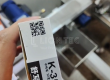
The photoelectric sensor on the production line synchronously captures the moving speed of products. The control system matches the ink droplet ejection frequency. Countless tiny ink droplets land precisely on moving workpieces and combine into complete, clear marks by dot matrix arrangement. It supports high-precision graphics, microcodes and tiny character printing at 200–1200 DPI, and adapts to one-item-one-code online variable data coding.
3. Core Reaction of UV Photocuring
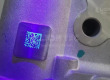
UV ink contains photoinitiators and photosensitive resin. Ink droplets remain liquid when attaching to substrates. The UV-LED cold light source running synchronously with the printhead emits ultraviolet light of specific wavelengths. After absorbing light energy, photoinitiators trigger polymerization and crosslinking reactions. The ink transforms from liquid to solid within milliseconds and forms a dense, wear-resistant protective film for markings. No air-drying is required. It fundamentally eliminates blurring and smudging issues found in traditional inks.
Practical Advantages of UV Inkjet Printer
1. Precise Matching with Production Lines & Lower Commissioning Costs
After mastering the linkage principle of piezo printing and photocuring, on-site maintenance staff can independently adjust printhead height, droplet voltage, UV lamp power and production line synchronization parameters. There is no need to wait for on-site technical support from manufacturers every time. It greatly shortens commissioning duration for new production lines and product changeovers, and reduces production downtime losses.
2. Prevent Marking Failures Fundamentally & Extend Equipment Service Life
Most common issues including ink breakage, blurred codes, incomplete curing and printhead clogging arise from improper operating conditions. Typical examples include increased ink viscosity under low temperature interfering with piezo ink ejection, or dust blocking the UV light source and interrupting curing reactions. A solid understanding of working principles enables standardized control of workshop temperature, humidity and daily cleaning routines, lowering wear of printheads and curing lamps and cutting consumable replacement expenses.
3. Flexible Compatibility with Full Range of Substrates & Diversified Product Marking Solutions
Benefiting from non-penetrating and high-adhesion photocuring features, manufacturers can evaluate the suitability of UV marking on plastics, glass, metals, paper, ceramics and other substrates without repeated sample testing.
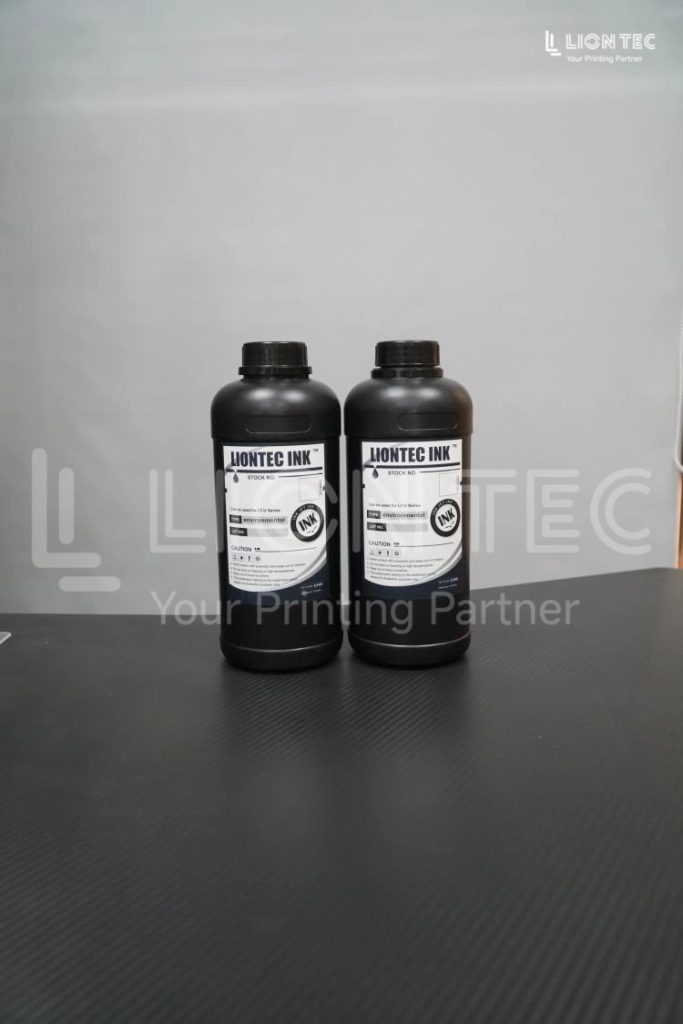
Based on this technology, LIONTEC develops multiple series of dedicated UV inks covering food, pharmaceutical, auto parts and electronics industries. Customers can select proper consumables independently according to practical application demands.
4. Meet Environmental Protection & Compliance Production Standards
UV curing generates 0 VOC emissions, complying with environmental standards for GMP, UDI medical devices and food packaging. No waste gas treatment facilities are required, which reduces investment in factory environmental upgrades. It perfectly meets compliant coding requirements for green factories and export-oriented products.
Conclusion
The core working principle of a UV inkjet printer lies in precise droplet positioning control of the piezoelectric printhead and ultrafast photopolymerization curing of UV ink. The coordination of both delivers high-quality marking effects featuring instant-dry performance and firm adhesion.
As an industrial inkjet printing equipment manufacturer with full-stack technical capabilities covering inkjet control, ink channel design, waveform development and ink formulation, LIONTEC commits to delivering efficient, eco-friendly and reliable UV coding solutions for customers in electronics, food, pharmaceutical, new energy and other industries.