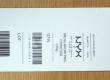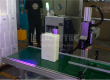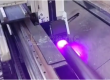
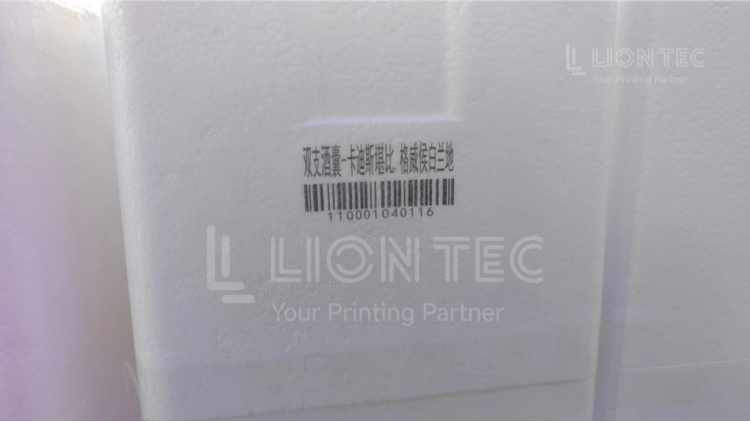
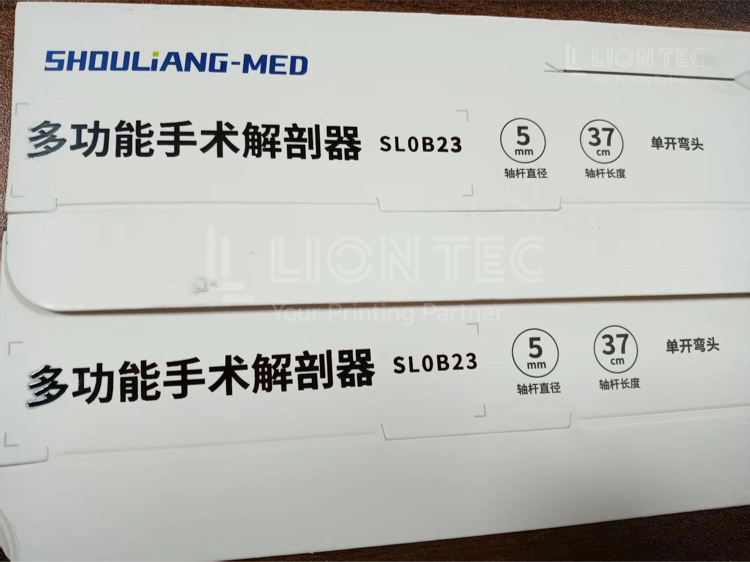
In the field of industrial manufacturing and packaging coding & marking, the requirements for coding adhesion vary greatly across different substrate surfaces. From plastics, metals, glass to coated cartons, ceramics and rubber, each material features unique surface energy, roughness and chemical properties. To achieve high-quality, highly durable coding on these substrates with UV Industrial Inkjet Equipment, the core lies in the precise application of UV coding technology.
UV Printing for Different Substrates
I. Substrate Sample Inspection & Basic Physical Parameter Collection
- Receive materials to be coded and collect key information: substrate type, surface tension, presence of release agent/coating, maximum heat resistance, and whether the surface is porous.
- Test substrate surface tension with dyne pen. UV ink generally requires substrate dyne value ≥38 dyn. PP/PE substrates usually register around 30 dyn and need corona pre-treatment.
- Record production line speed, coding content (text / 2D barcode), and adhesion acceptance criteria.
II. Ink Selection & Matching
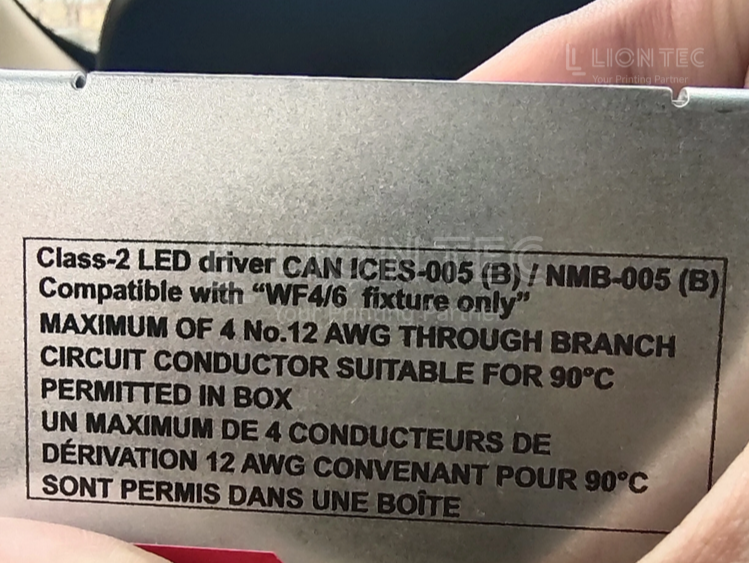
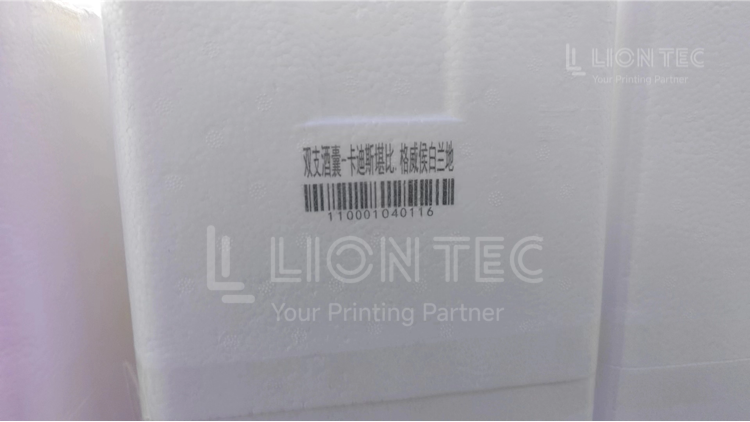
- For porous paper / foam substrates: select low-viscosity UV ink to control ink droplet penetration and prevent ink bleeding.
- For smooth metal, glass, PET film: adopt high-adhesion UV ink.
- For low-surface-energy PP, PE: use dedicated corona-type UV ink.
- For heat-sensitive flexible packaging substrates: use ink matched with low-heat curing.
III. Parameter Tuning for UV Industrial Inkjet Equipment
- Set the distance between printhead and substrate. Standard UV coding distance ranges from 1~5 mm. Reduce the distance for rigid flat substrates to improve precision; raise the distance appropriately for uneven foam substrates to avoid printhead scratching.
- Adjust ink droplet size and jet frequency. Small droplets are selected for high-speed production lines to guarantee clarity.
- Regulate UV curing lamp power and lamp distance. Reduce lamp power and increase air cooling for heat-sensitive substrates.
- Enable printhead humidification and anti-splash negative pressure system to prevent ink mist contamination of the printhead.
IV. Pre-treatment Support (Enabled as Required)
- For low-surface-energy plastics: install corona treater or plasma treatment to boost substrate surface tension.
- For workpieces contaminated with oil or release agent: add dust removal and surface cleaning stations.
- For highly reflective substrates: adjust curing lamp angle to avoid reflected UV light damaging the printhead.
V. Sample Coding Test & Performance Verification
- After coded samples stand still, perform wipe tests (alcohol & dry wipe), tape adhesion tests, and 2D barcode read rate tests. Run long-term continuous trials to check ink accumulation, flying ink and printhead clogging.
- Lock parameters once tests pass and save as a dedicated formula file for this substrate.
VI. Mass Production & Maintenance Setup
- Record the full set of parameters for this substrate. Recall the formula when changing materials. Regularly clean the reflector of UV lamps, monitor UV energy attenuation, and replace lamps periodically.
- Watch out for incoming substrate variation during production line inspection. Re-run sampling verification when batch changes occur for the same substrate.
Advantages of UV Coding Technical Specifications
- Improved production line compatibility and lower equipment investment costs. By adjusting parameters and ink formulas, UV Industrial Inkjet Equipment can handle substrates for packaging, photovoltaic, 3C electronics, medical UDI and many other industries. Manufacturers do not need to purchase multiple coding machines for different products, cutting fixed asset investment and production floor occupancy.
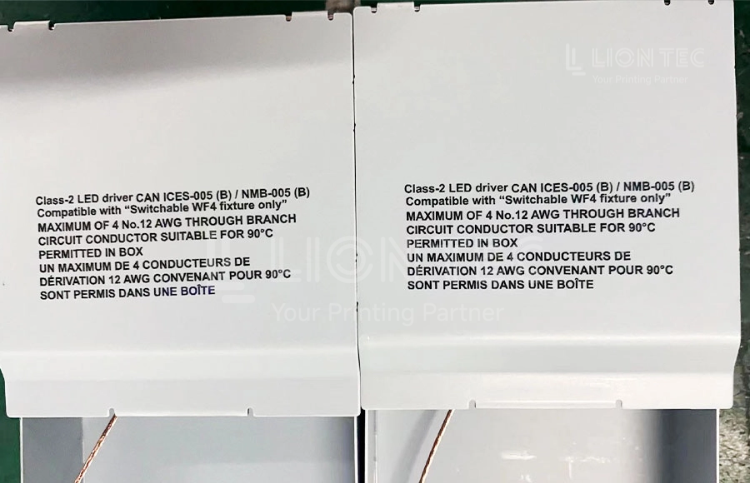
- Higher stability of coded marks to reduce rework and scrap. When UV coding technical guidelines are implemented according to substrate characteristics, 2D barcodes and characters maintain stable clarity. The coding adhesion passes friction and alcohol wipe tests. It reduces product rework and bulk scrap caused by missing or blurred codes, lowering quality control risks. It is especially suitable for products requiring high traceability, such as medical packaging and photovoltaic modules.
- Compatible with high-speed assembly lines to guarantee production efficiency. UV ink cures instantly. Printed products can be stacked and conveyed immediately after coding without the drying waiting time required for water-based inks. With proper substrate parameter matching, UV Industrial Inkjet Equipment keeps pace with high-speed line cycles and will not slow down the whole production line due to mark drying.
Conclusion
LIONTEC has deep expertise in industrial inkjet printing. We deliver end-to-end solutions covering ink formulation, hardware, control software and process commissioning. For different substrates and production line scenarios, LIONTEC provides stable and reliable solutions with UV Industrial Inkjet Equipment, helping manufacturers achieve digital upgrading of product marking.