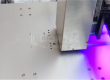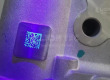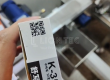
Mass-production Solution Validated by Leading Battery Manufacturers
Introduction: The Inflection Point of Innovation in Power Battery Insulation Technology
As the new energy vehicle industry marches toward an annual output of tens of millions of vehicles, the safety and reliability of power batteries have become the core high ground of industrial competition. Among many critical battery manufacturing procedures, the insulation treatment of power cell shells — this “invisible” process — is undergoing a fundamental transformation from “film lamination” to “inkjet printing”.
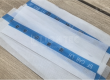
The traditional PET blue film wrapping process has been adopted for many years. However, its inherent drawbacks including poor adhesion, insufficient voltage resistance and low consistency become more prominent amid new technologies such as 800V high-voltage platforms and megawatt-level fast charging. The battery industry is in urgent need of a safer, more efficient and more economical insulation solution.
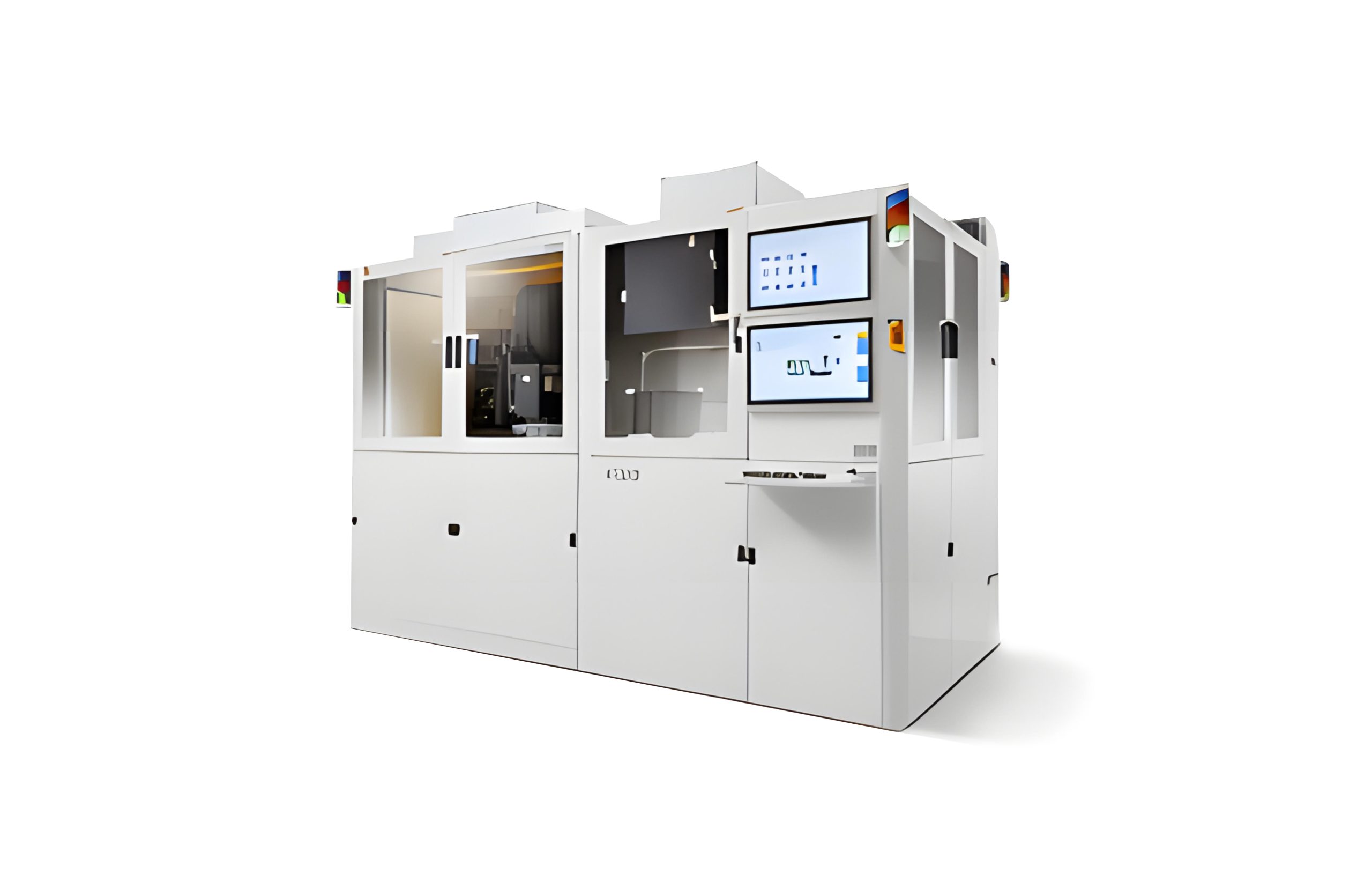
Against this backdrop, LIONTEC Power Cell Shell Inkjet Equipment comes into being. Leveraging leading UV inkjet printing technology, LIONTEC has served multiple leading battery enterprises and achieved mass delivery. This article will deeply analyze this technological innovation and its industrialization results.
I. Five Bottlenecks of Traditional Film Wrapping Process
To understand why power cell inkjet equipment has become popular in the industry, we first need to recognize the inherent defects of the traditional PET blue film process:
| Pain Points | Specific Performance | Impacts on Battery Performance |
|---|---|---|
| Poor Adhesion | Low bonding strength between blue film and cell shell, with shear strength of only 2-3MPa | Prone to bubbling and peeling under long-term vibration, bringing potential safety hazards |
| Insufficient Voltage Resistance | Uneven thickness of insulation layer, easy breakdown under high-voltage tests | Fails to meet strict insulation requirements of 800V high-voltage platforms |
| Poor Consistency | Large thickness deviation caused by manual / semi-automatic film wrapping | Low yield rate and increased manufacturing costs |
| Weak Weather Resistance | Blue film tends to age and turn brittle under high-temperature and high-humidity environments | Degradation of insulation performance throughout the full battery lifecycle |
| Efficiency Bottleneck | Slow tact time of film wrapping process, hard to match high-speed automated production lines | Restricted overall line throughput |
These issues have become increasingly prominent amid the rapid expansion of the new energy vehicle market. Battery packs must withstand higher voltage and greater external impact. Traditional film wrapping technology has become a critical factor limiting the performance improvement of power cells, and LIONTEC Power Cell Shell Inkjet Equipment provides a brand-new alternative solution.
II. LIONTEC Power Cell Shell Inkjet Equipment: Technical Solution Analysis
Targeting the above industry pain points, LIONTEC’s Power Cell Shell Inkjet Equipment adopts industrial-grade UV inkjet printing technology to deliver a revolutionary solution for cell insulating coatings.
2.1 Core Inkjet Printing Technology
The core of the battery coding machine lies in the printhead and ink system. LIONTEC equipment features the following key technical capabilities:
- Micron-level precise deposition: Supports ink droplet volume control from 6pl to 40pl, with coating thickness adjustable at 100μm±10μm
- High-viscosity fluid handling: Breaks the 25cP limit of conventional printheads, enabling jetting of 100cP+ ultra-high viscosity UV insulating coatings
- Single-Pass high-volume printing: A single printing pass can form insulating coatings over 100μm thick
- Ultra-high production efficiency: Taking the common 230Ah cell as an example, the printing speed reaches 50-60 ppm (50 to 60 cells per minute)
2.2 Core Advantages of LIONTEC Solution
Compared with traditional solutions, LIONTEC cell inkjet equipment achieves multiple breakthroughs:
① High-strength adhesion
Coating shear strength reaches 15–19MPa, 5–6 times that of conventional PET blue film, ensuring firm adhesion of cells under long-term vibration conditions.
② Superior insulation performance
Under 5000–6000V high voltage testing, leakage current can be controlled below 0.1mA, completely eliminating the risk of high-voltage breakdown and perfectly matching 800V high-voltage platforms.
③ Ultra-high yield rate
First-pass yield exceeds 98%, and the final yield reaches over 99.9%, greatly cutting manufacturing costs.
④ Remarkable cost advantage
The comprehensive material cost is 30%–50% lower than traditional film wrapping, with ink utilization above 99% and zero material waste.
⑤ Flexible multi-surface printing
Compatible with various cell types (prismatic / cylindrical), enabling simultaneous printing on six sides without insulating cover sheets.
III. Performance Comparison: UV Inkjet Printing vs Traditional Film Wrapping
To intuitively demonstrate the technical advantages of LIONTEC Power Cell Shell Inkjet Equipment, below is the comparison of key performance indicators:
| Indicator | Traditional PET Blue Film Process | LIONTEC UV Inkjet Printer | Improvement |
|---|---|---|---|
| Final Yield | 85–90% | ≥99.9% | Over +10% |
| Shear Strength (Adhesion) | 2–3 MPa | 15–19 MPa | 5–6 times |
| Dielectric Withstand Voltage | Prone to breakdown | 5000–6000V, <0.1mA | Substantial leap |
| Material Utilization | 70–80% (cutting waste) | ≥99% | Over +20% |
| Comprehensive Material Cost | Baseline | Reduced by 30%–50% | -30%~50% |
| Production Line Takt Time | 20–30 ppm | 50–60 ppm | Doubled |
IV. Cooperation Cases with Leading Battery Enterprises: Outstanding Performance Verified in Mass Production
As a professional coding machine manufacturer, LIONTEC has accumulated rich mass delivery experience in the new energy battery sector. Below are typical cooperation cases:
Case 1: Global Leading Power Battery Enterprise – Mass Production Line for Prismatic Cell Insulating Coating
Customer Background: One of the world’s top three power battery manufacturers, urgently seeking solutions for cell insulation on the 800V high-voltage platform.
LIONTEC Solution: Turnkey integration of power cell shell inkjet equipment, including laser cleaning module, UV inkjet printing module, LED curing module and online inspection module.
Mass Production Results:
- Stable mass production achieved, with over one million cells delivered cumulatively
- Production yield consistently maintained above 99%
- Passed the customer’s stringent 1000V high-voltage platform test
- Comprehensive cost reduced by more than 40% compared with film wrapping process
Case 2: Supply Chain of Leading Domestic New Energy Vehicle Maker – Insulation Inkjet on Large Cylindrical Cell Side Walls
Customer Background: Large cylindrical battery production line supporting a top new energy vehicle manufacturer, requiring high-precision, high-efficiency side-wall insulation solutions.
LIONTEC Solution: Custom battery coding machine solution supporting 360° side-wall printing for 4680 large cylindrical cells.
Mass Production Results:
- Production taktime reaches 50 ppm to meet the automaker’s JIT delivery requirements
- Coating thickness consistency of ±5μm, far exceeding industry standards
- Passed vehicle endurance vibration test and high-temperature & high-humidity aging test
Case 3: Leading Energy Storage Battery Enterprise – Multi-side Insulation Inkjet for Prismatic Cells
Customer Background: A top enterprise in the energy storage battery industry, requiring flexible insulation solutions compatible with multi-size cells.
LIONTEC Solution: Cell inkjet equipment plus quick-change fixture design, enabling fast switching among multiple cell sizes.
Mass Production Results:
- Product changeover time shortened from 2 hours to 15 minutes
- First-pass yield reaches 98.5%, final yield 99.8%
- Ink utilization of 99.2%, no waste disposal costs
V. Why Choose LIONTEC Power Cell Shell Inkjet Equipment?
5.1 Full-stack Technical Capabilities
LIONTEC owns full-stack technical capabilities ranging from image processing, print driver, ink circuit design, waveform development to ink formulation.
- Self-developed inkjet control software, including three core modules: Suanni (inkjet control), PrintMsger (communication), picWeather (image output)
- 500+ certified inks, covering multiple functional requirements such as insulation, corrosion resistance and high adhesion
- Multi-printhead linkage: supports synchronous operation of up to 8 printheads to meet large-format and multi-surface simultaneous printing
5.2 Endorsement by Leading Industry Clients
LIONTEC functional printing equipment is widely adopted by top 3C brands, power lithium battery manufacturers, next-generation photovoltaic technology and other sectors. At the cutting edge of the new energy battery insulation inkjet market, we achieve over 100% annual growth in business performance.
5.3 Comprehensive After-sales Service System
- Rapid Response: 24-hour technical support from local team
- On-site Service: Dedicated on-site engineers available for mass-production customers
- Remote Diagnosis: Remote equipment monitoring and predictive maintenance supported
VI. Selection Recommendations & Conclusion
6.1 Enterprise Selection Guide
For enterprises planning or upgrading cell insulation production lines, evaluate power cell shell inkjet equipment from the dimensions below:
| Evaluation Dimension | Key Points to Consider |
|---|---|
| Mass Production Verification | Does the supplier have mass delivery cases with leading battery manufacturers? |
| Printhead Technology | Does it support high-viscosity ink? What is the maximum thickness for single pass? |
| Takt Capacity | Can it match the whole-line production target (ppm)? |
| Yield Assurance | Is there an inline inspection + automatic rework mechanism? |
| Cost Advantage | Comprehensive cost of UV ink vs cost of blue film material |
| Service Capacity | Does the supplier have experience supporting large-scale mass production in the battery industry? |
6.2 Conclusion
The power battery industry is undergoing a profound transformation from “quantity” to “quality”. Centered on UV inkjet printing technology, LIONTEC power cell shell inkjet equipment has completed mass production verification at multiple leading battery enterprises and is setting a new benchmark for cell insulating coatings.
For coding machine manufacturers, this represents not merely a technical upgrade, but a strategic leap from “marking identification” to “functional coating”. LIONTEC will continuously invest in the R&D and innovation of cell coding machines, battery coding machines and cell inkjet equipment, delivering safer, more efficient and more economical inkjet solutions for the new energy battery industry.
LIONTEC Power Cell Shell Inkjet Equipment — Validated by leading battery enterprises with stable and reliable mass delivery.
(To get customized solutions tailored to your cell specifications or conduct material sampling tests, please contact the LIONTEC technical team.)