In-depth Comparison of Three Industrial Printing Technologies to Find the Optimal Solution for Industrial Identification
Within industrial identification scenarios, your selection over core industrial printing solutions directly governs product traceability, brand presentation and overall production efficiency. Confronted with mainstream types of printers in the market—piezoelectric industrial inkjet printer, thermal bubble printer and laser printer—manufacturers are often trapped in the confusion over printer and types matching & technical model selection. This article delivers an in-depth analysis of the respective properties of these three printing technologies, helping you figure out the optimal industrial identification solution.
Analysis of Three Kinds of Industrial Printing Technologies
1. Piezoelectric Printing Technology
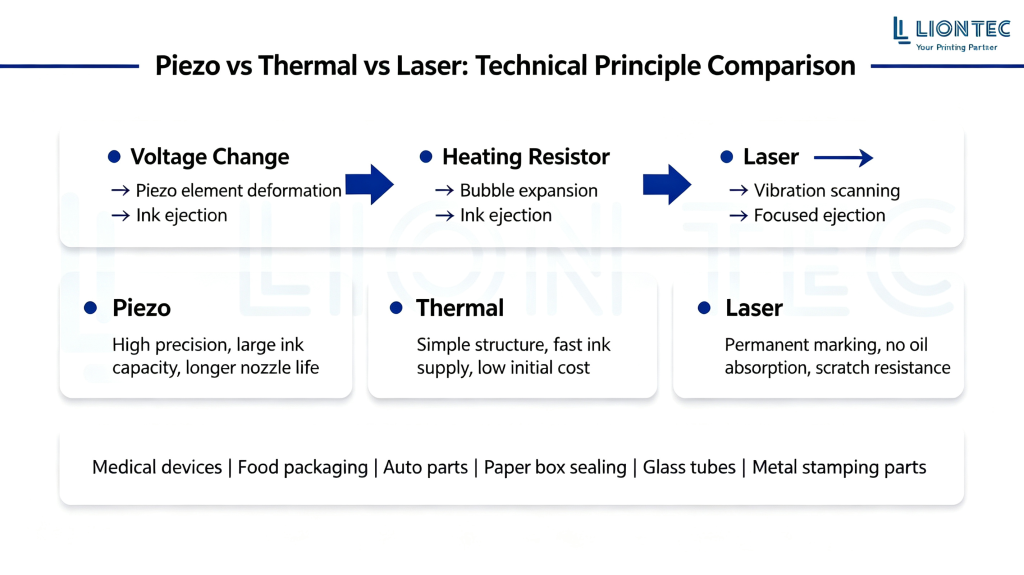
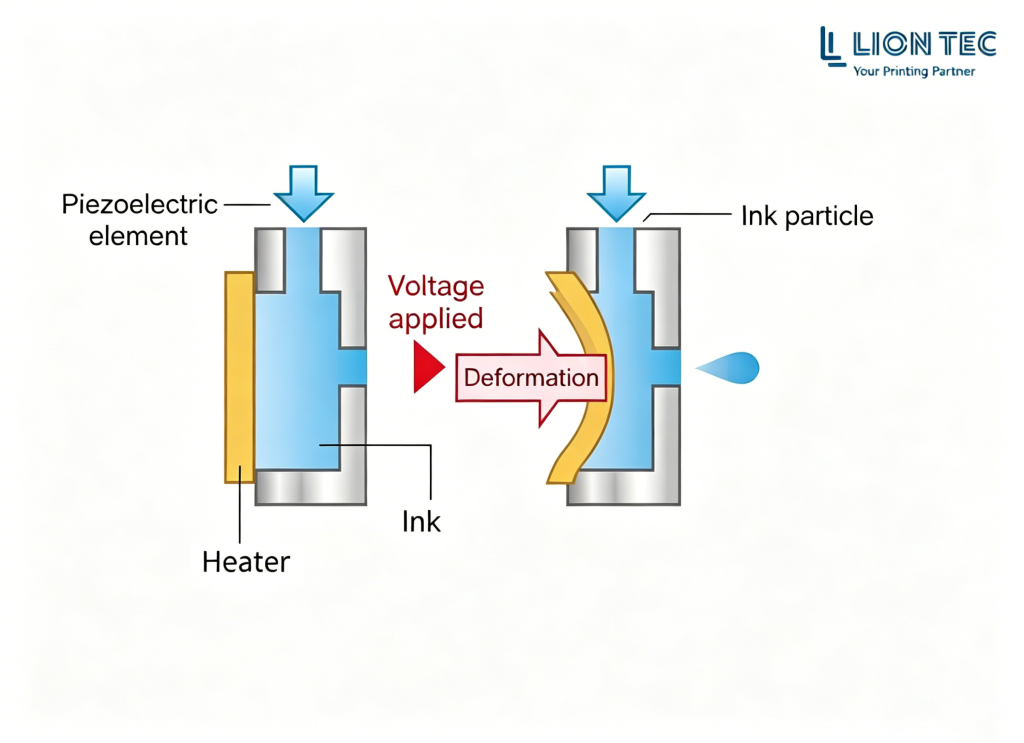
Its core component is the piezoelectric crystal installed inside the printhead. Voltage application causes crystal deformation to squeeze the ink chamber and eject ink droplets through nozzles. Free of heating procedures, this technology barely damages ink chemical composition, meanwhile users are able to adjust droplet size accurately via voltage control.
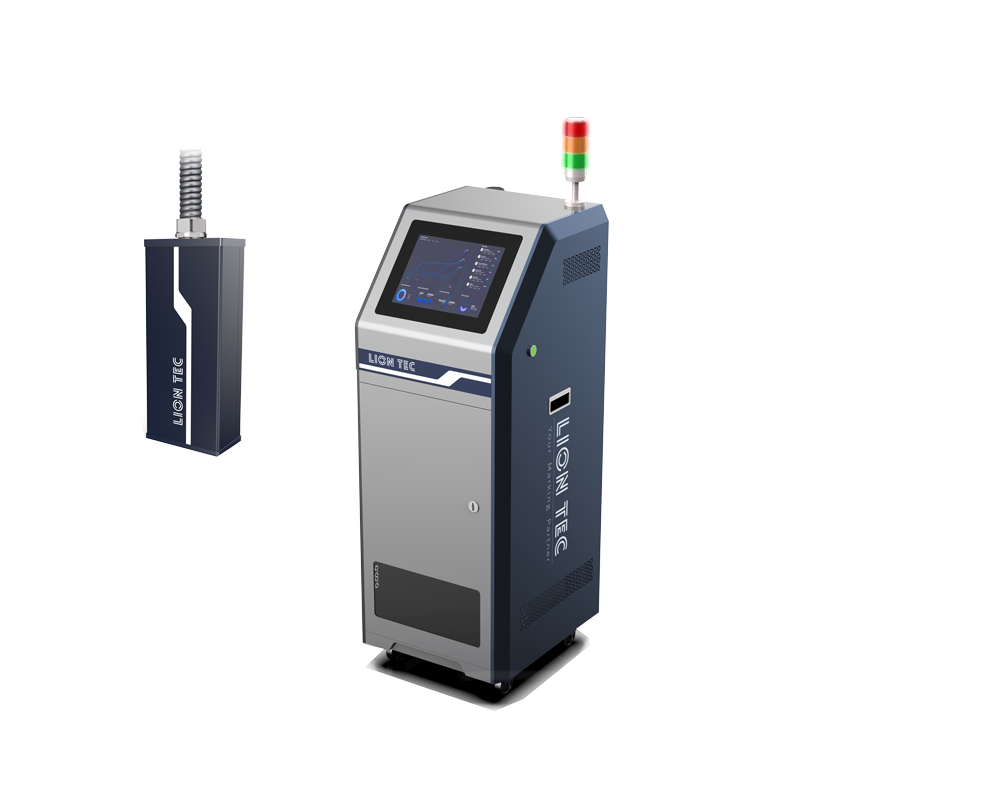
Most industrial inkjet printer systems manufactured by LIONTEC adopt this technical route, featuring high precision and outstanding durability to match continuous industrial mass production scenarios.
Most industrial inkjet printer systems manufactured by LIONTEC adopt this technical route, featuring high precision and outstanding durability to match continuous industrial mass production scenarios.
2. Thermal Bubble Printing Technology
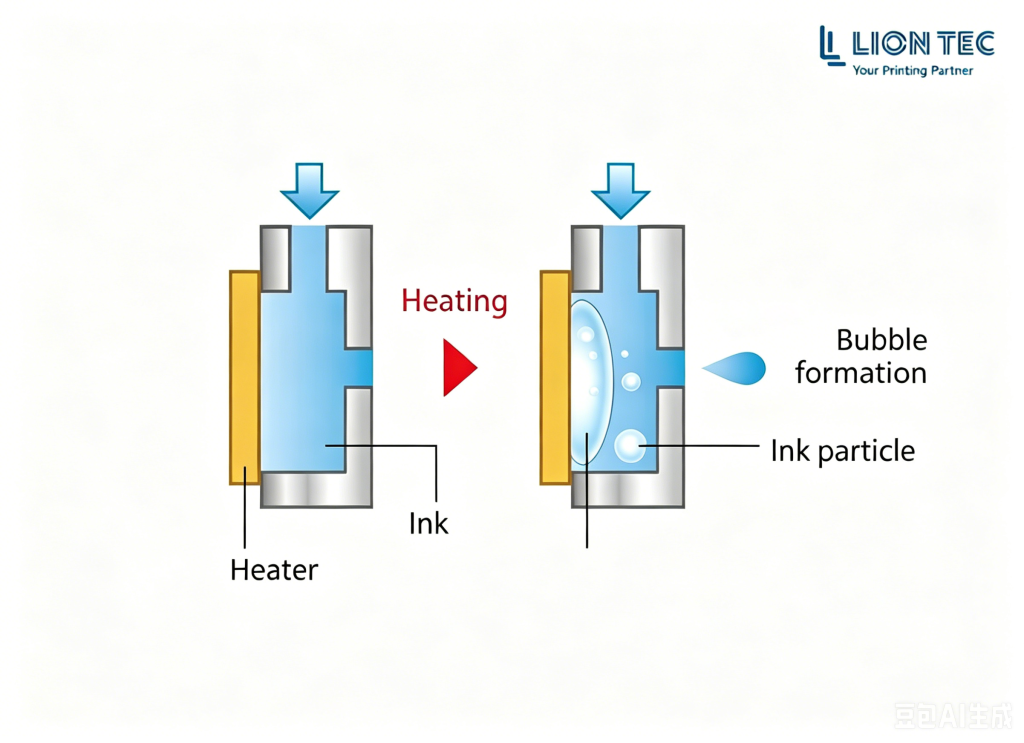
Tiny heating elements instantly heat ink up to roughly 300°C to generate bubbles, and the expanding bubble pressure pushes ink droplets out of nozzles. This type of printers delivers high resolution of 300dpi up to 600dpi with printing quality comparable to formal printed products. It is ideal for high-precision variable data printing on retail packages and pharmaceutical packages.
3. Laser Printing Technology
High-density laser beams focus on workpiece surfaces to create permanent marks via ablation, engraving or color change through physical and chemical reactions, with zero printing consumables required during operation.
FAQ for Printer Selection
1. Both piezoelectric and thermal bubble devices belong to industrial inkjet printer products, why is there a huge gap in purchase price and maintenance expense?
Though both deliver drop-on-demand printing output, printhead structure and supporting ink system create core disparities among these types of printers. The piezoelectric printhead consists of precision ceramics and intricate circuits, leading to high upfront costs. Nevertheless, it operates without heating action, compatible with a wide range of ink formulas and boasts an ultra-long service life.
By contrast, thermal bubble printheads rely on high-temperature heating and are mostly integrated with ink cartridges as consumable parts. Such printer and types carry low initial procurement costs, yet frequent cartridge replacements bring considerable overall operating costs in the long run. Meanwhile, ink tends to carbonize under high working temperature, bringing risks of printhead clogging.
By contrast, thermal bubble printheads rely on high-temperature heating and are mostly integrated with ink cartridges as consumable parts. Such printer and types carry low initial procurement costs, yet frequent cartridge replacements bring considerable overall operating costs in the long run. Meanwhile, ink tends to carbonize under high working temperature, bringing risks of printhead clogging.
2. Laser printing requires no consumables, so it is not the top priority for all production lines?
The permanent marking property of laser printing is both a merit and a limitation. Material compatibility acts as the primary restricting factor. Laser beams modify material surfaces via high energy, performing excellently on paper, metals and certain plastic materials. However, it fails to form high-contrast black or white marks on white or transparent PE/PP flexible packaging films, and may even pierce thin packaging layers.
Moreover, laser marking cannot match the covering capacity of printing inks. It cannot fulfill the demand for printing white production dates on dark bottle caps.
Moreover, laser marking cannot match the covering capacity of printing inks. It cannot fulfill the demand for printing white production dates on dark bottle caps.
Benefits of Accurate Matching for Printer Solutions
1. Lower Defect Rate & Ensure Compliant Traceability
Reasonable matching among these types of printers eliminates common issues such as blurred printing, easy abrasion and barcode scanning failure. Subject to mandatory traceability regulations for medical devices, 3C electronics and food industries, piezoelectric UV printing resists friction during storage and transportation, while permanent laser printing prevents tampering. Both effectively cut risks of rework during quality inspection and product recalls from the market. Real-world data from LIONTEC customers proves that the printing defect rate drops by more than 90% after matching proper printer and types.
2. Cut Overall Operating Costs of Production Lines
Mismatched printing solutions cause extra losses: thermal bubble printing tends to wear off marks on metal bottles, and laser printing may burn through flexible packaging materials, both resulting in scrapped products. A proper industrial inkjet printer plan reduces consumable waste, workpiece rejection and equipment downtime for maintenance. Piezoelectric printheads deliver stable ink ejection for millions of shots, and laser printing requires no consumables, which steadily brings down the unit marking cost during long-term mass production.
3. Support Flexible Multi-product Production & Improve Production Line Compatibility
Piezoelectric printing supports switching between more than ten types of inks, enabling a single industrial inkjet printer to mark cartons, plastics, glass and various other materials. Thermal bubble printing works well with all kinds of paper packages. Laser devices can switch between metallic and non-metallic processing by replacing laser sources. Rational combination of different printer and types removes the need for redundant equipment. One single production line can complete marking for products of various specifications, perfectly fitting current flexible manufacturing featuring small-batch & multi-batch orders.
4. Meet Industrial Environmental Requirements & Cleanroom Standards
Piezoelectric UV ink features low VOC content and zero irritant solvents, suitable for dust-free workshops in pharmaceutical and food sectors. Laser printing produces no ink volatilization, waste liquid or waste residue throughout operation, complying with environmental assessment standards for green factories. Water-based ink for thermal bubble printing is odor-free and friendly to clean production of lightweight packages. All three types of printers can satisfy environmental standards across various industries respectively.
Conclusion
There is no one-size-fits-all industrial printing equipment among all types of printers, only the most appropriate solution for actual demands. The industrial inkjet printer with piezoelectric design stands out for outstanding durability and broad substrate compatibility. Thermal bubble printing gains an edge with high resolution and low entry costs, while laser printing boasts permanent marking effects and extremely low long-term maintenance expenses.
We recommend enterprises make purchasing decisions based on four dimensions: printing substrate, printed content, production speed and overall cost. With the professional sample testing service provided by LIONTEC, you can accurately determine the most suitable printing solution matching your production demands.