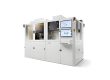
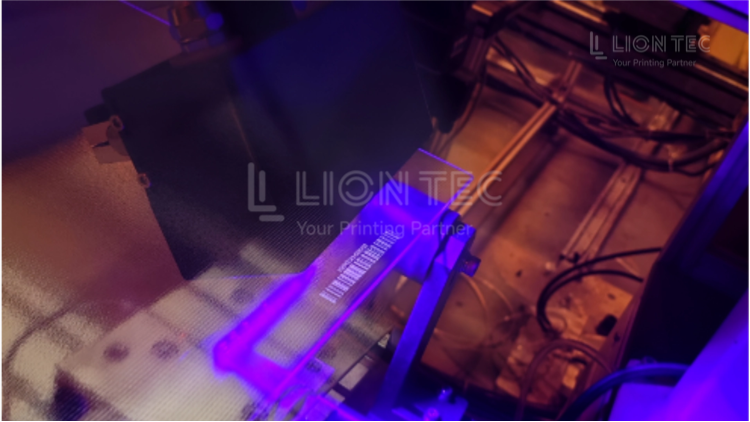
On Industrial Inkjet Printing production lines, UV curing is a critical process that determines final print quality and line efficiency. How UV lamp power and irradiation time are matched directly affects whether the ink layer can be fully cured, whether adhesion meets standards, and whether production cadence is optimized.
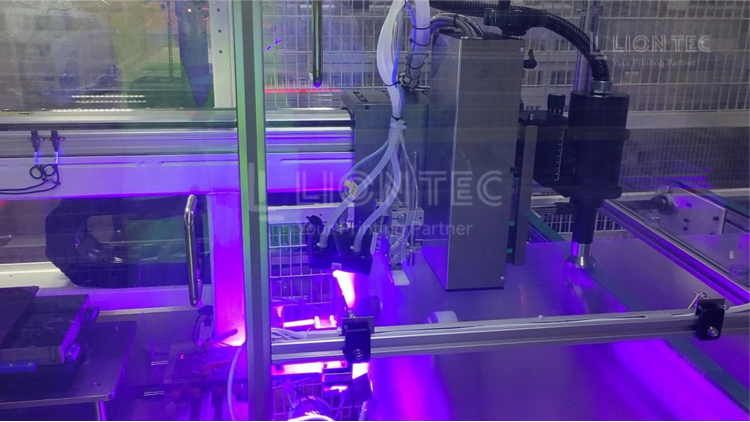
Concept Breakdown: UV Lamp Power and Irradiation Time in Industrial Inkjet Printing
Power: In the context of Industrial Inkjet Printing curing, power typically refers to the radiant energy of the UV lamp, also known as penetration capability. If UV lamp power is insufficient, even prolonged irradiation time cannot achieve complete curing of the printed product.
Irradiation Time: In Industrial Inkjet Printing scenarios, irradiation time is usually linked to production line speed, referring to the duration that the ink layer is exposed to ultraviolet light. A fundamental engineering relationship exists among these three parameters.
Energy Density = Peak Irradiance × Irradiation Time
To achieve full curing, sufficient energy density must be delivered to the ink layer. Energy density can be achieved either through high power with short exposure time, or low power with extended exposure time — however, in practical engineering applications, it is far from a simple “either-or” choice.
Industrial Inkjet Printing curing also requires attention to wavelength as a prerequisite parameter. UV-LED curing light sources typically operate in narrow wavelength bands such as 365nm, 385nm, 395nm or 405nm. The wavelength must match the absorption peak of the photoinitiator in the ink; otherwise, no amount of power or time can effectively trigger the polymerization reaction.
Benefits of Precise Matching Between UV Lamp Power and Irradiation Time
1. Ensuring Reliable and Consistent Curing Quality
Precise matching ensures full cross-linking of the ink layer from surface to bottom, delivering qualified adhesion, scratch resistance, no tackiness and no migration. Fully cured ink layers possess stable physical and chemical properties, meeting compliance testing requirements for scenarios such as food packaging, medical device UDI marking and electronic component printing.
2. Maximizing Line Speed Upper Limit and Effective Production Capacity
While ensuring finished product qualification rate, optimizing the power-time matching enables finding the highest sustainable operating speed with qualified quality. This avoids production capacity waste caused by deliberate speed reduction for quality purposes, and increases production line output under the same equipment conditions.
3. Reducing Defect Rate and Rework Costs
Improves common defects such as insufficient curing, tacky ink layers, roll-to-roll sticking, and easily scratchable markings, reducing scrap and labor input for secondary re-inspection.
4. Extending Service Life of Core Equipment Components
Eliminates the need for long-term full-power operation of UV curing modules, reducing LED chip thermal load. Stable process parameters also reduce frequent printhead start-stop cycles and nozzle clogging probability, cutting maintenance frequency. Industrial-grade UV-LED lamps can achieve tens of thousands of hours of operating life under proper thermal management.
5. Enabling Flexible Production and Quick Changeover
After establishing a standardized power-time parameter model, corresponding processes can be quickly recalled when switching products or changing substrates, shortening production line changeover and debugging time — ideal for multi-variety order production models.
Conclusion
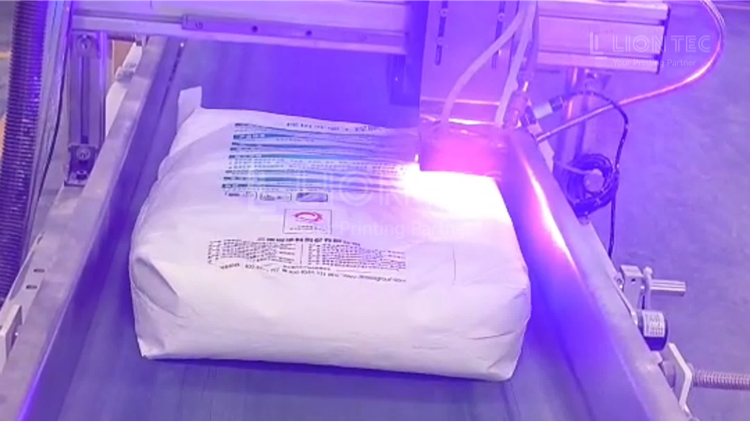
As an equipment manufacturer deeply rooted in the Industrial Inkjet Printing field, LIONTEC is committed to providing customers with precise and reliable UV curing solutions. For more technical details or parameter optimization recommendations tailored to your specific production line, feel free to contact us.