In 2026, when selecting an Electroceramic UV Inkjet Printer, the real consideration is no longer simply “whether it can print”. Instead, you need to evaluate whether the equipment can maintain stable printing quality over the long term under complex glaze surfaces, dusty environments, multi-specification products and continuous production conditions.
For the electroceramic industry, printing results are never determined by a single equipment parameter. They involve the comprehensive matching of material adaptability, ink system, inkjet system, motion control, data processing, curing process and production environment. Therefore, a truly industrial-grade Electroceramic UV Inkjet Printer should be judged from the following five dimensions: substrate adaptability → printing system stability → dynamic printing control → high-precision data coding → industrial reliability.
I. Substrate Adaptability Under Complex Glaze Surface Conditions
A typical characteristic of electroceramic products is that their surface conditions differ significantly from ordinary paper, films and other materials. Especially after glaze treatment, the surface properties will directly affect droplet status, ink film formation and final adhesion effect. Therefore, for the Electroceramic UV Inkjet Printer, the primary challenge is not “whether the resolution is sufficient”, but whether the printing process can form stable matching with the product surface.
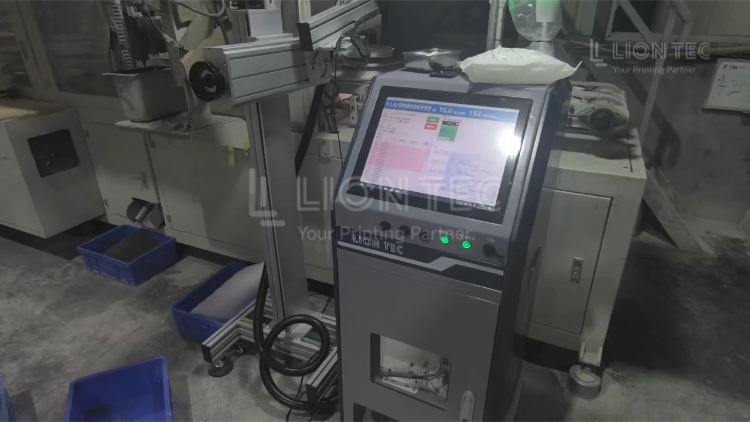
A professional industrial UV inkjet system must be capable of process adaptation for different material surfaces. Such adaptation is not simply replacing one type of ink, but the coordination among material characteristics, ink system, inkjet status and curing conditions. The high-resolution UV marking system launched by LIONTEC supports industrial piezoelectric printheads, 600DPI, multi-printhead expansion and online variable data, with application adaptation for industrial materials including ceramics, glass and metals.
II. Stable Printheads Are Only Surface Value; What Truly Matters Is Printing System Stability
During long-term operation of industrial inkjet equipment, print quality is rarely affected by a single component. The true determinant of equipment reliability lies in the coordination of the entire printing system. Factors including ink condition, inkjet status, ink supply status and environmental changes may all ultimately be reflected in printing results. Therefore, professional equipment must deliver stable ink circuit management, refined ink status control, and printing stability for continuous industrial production.
For different types of industrial inks, especially special functional inks, matching between equipment and consumables is even more critical. LIONTEC has long built a complete system for industrial inkjet equipment and consumables, with capabilities in ink formulation, ink circuit design and waveform development. The real technical barrier is not any individual component, but the system coordination capability among equipment, ink and process for your Electroceramic UV Inkjet Printer.
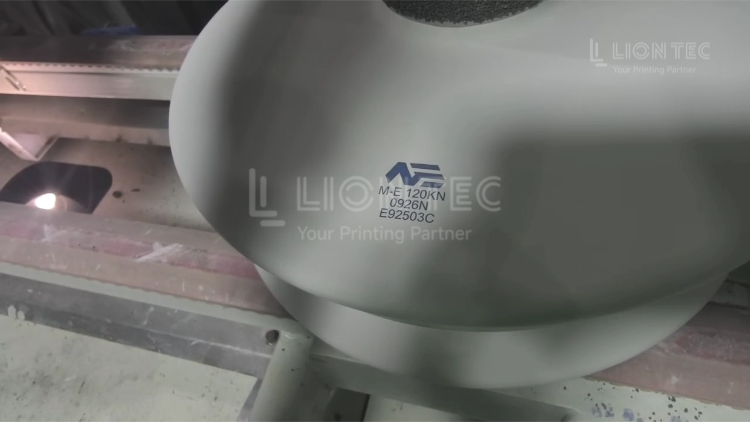
III. The Core for Multi-specification Products Lies in Dynamic Printing Control Capability
Electroceramic products usually come in various specifications. If heavy manual adjustments are required whenever switching products, the efficiency and consistency of the equipment in actual production will be compromised. Therefore, industrial UV marking equipment in 2026 should focus more on whether the machine can dynamically maintain stable printing conditions as product status changes.
Functions including product detection, position recognition, print distance management and motion synchronization essentially belong to this capability. Mechanical actions such as automatic height adjustment are merely execution links within the dynamic control system. What truly matters is whether printing quality remains stable after product changes, which delivers more practical value than promoting a single mechanical structure.
IV. High Precision Cannot Be Defined Merely by a DPI Figure
In the UV inkjet industry, DPI is often a key metric for equipment comparison. However, for industrial buyers, DPI does not equal final printing precision. Resolution mainly reflects image output capacity, while the final marking quality on products is also affected by inkjet status, mechanical movement, product positioning, production speed, material properties and other factors. For electroceramic products, real-product verification is strongly recommended, such as:
- Stability of small character edges
- Completeness of logo details
- Reliable scannability of QR codes
- Consistency across multiple production batches
- Marking quality stability under high-speed operation
A professional equipment selection logic is not blindly chasing higher parameters, but achieving proper matching among resolution, inkjet performance, product characteristics and production speed for your UV Printing Machine.
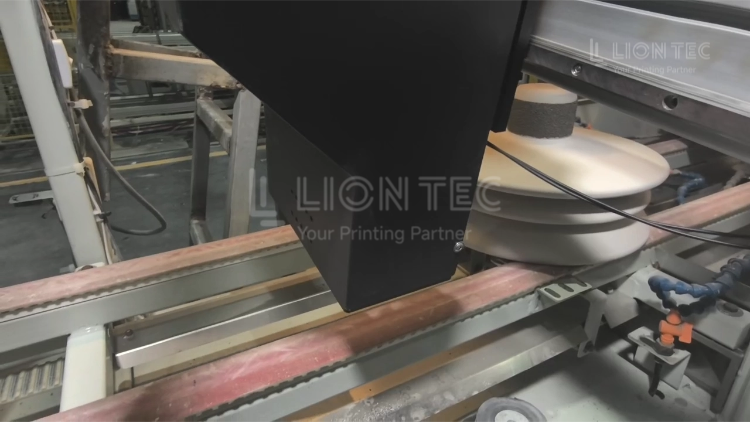
V. Industrial Reliability: The Foundation for Practical Implementation of All Technologies
UV curing, protective structures and equipment sealing are indispensable components of industrial equipment. However, these are not isolated “feature selling points”. Ultimately, they serve a greater goal: enabling your UV Printing Machine to run on production lines for the long term with stability and safety.
True industrial reliability requires comprehensive consideration, including printing system stability, consumable compatibility, equipment maintainability, fault management, production line coordination and service response capability. This is also the key distinction between industrial UV inkjet equipment and ordinary printing devices.
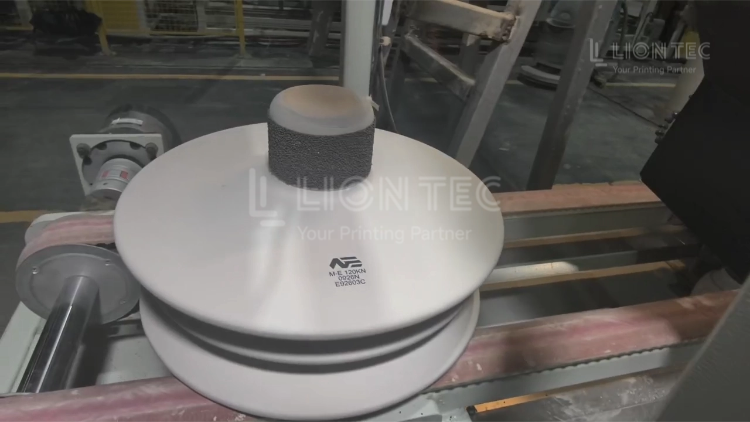
Conclusion
For electroceramic manufacturers, the true value of a device does not lie in a long feature list. Instead, it hinges on its adaptability to complex materials, control capability for diverse specifications, stability during continuous production, and scalability to meet changing demands in the future. These are the key aspects worthy of attention for electroceramic UV coding machines in 2026.