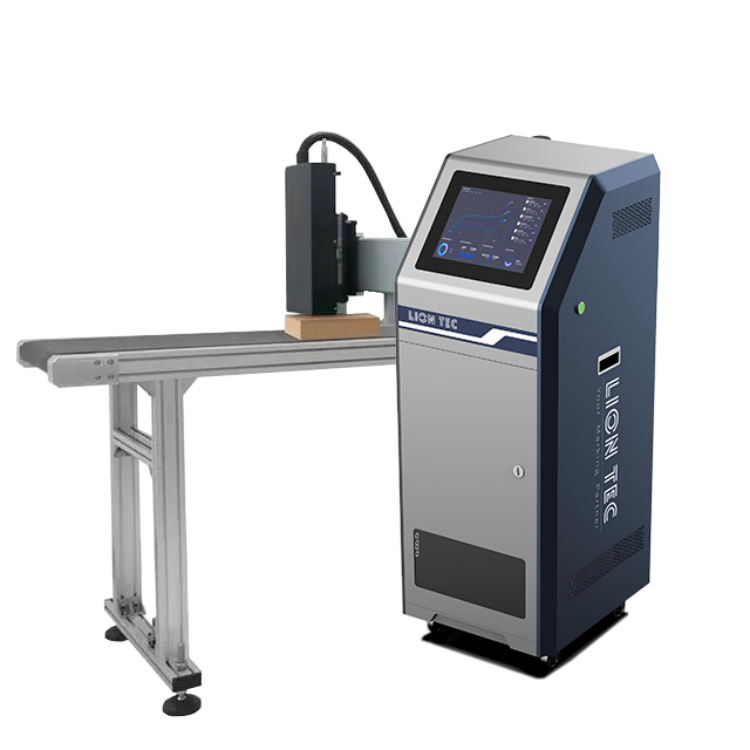
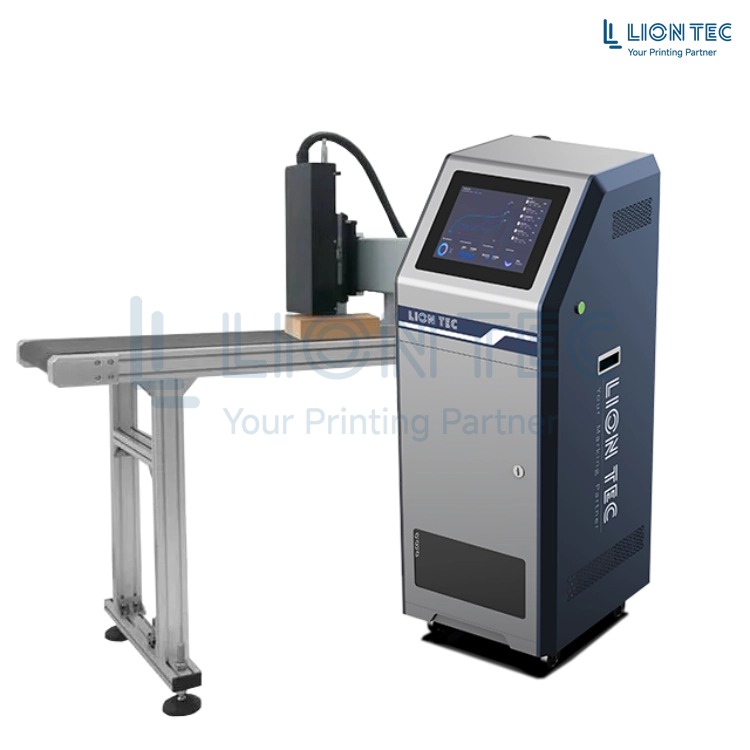
In the industrial coding & marking industry, UV Coding Machine is high-precision, high-efficiency equipment widely adopted for variable data printing and functional printing across electronics, food, pharmaceutical, PV, new energy battery, building materials and other sectors.
Nevertheless, pre-start inspection is critical for the UV Coding Machine to consistently deliver stable, crisp printing results.
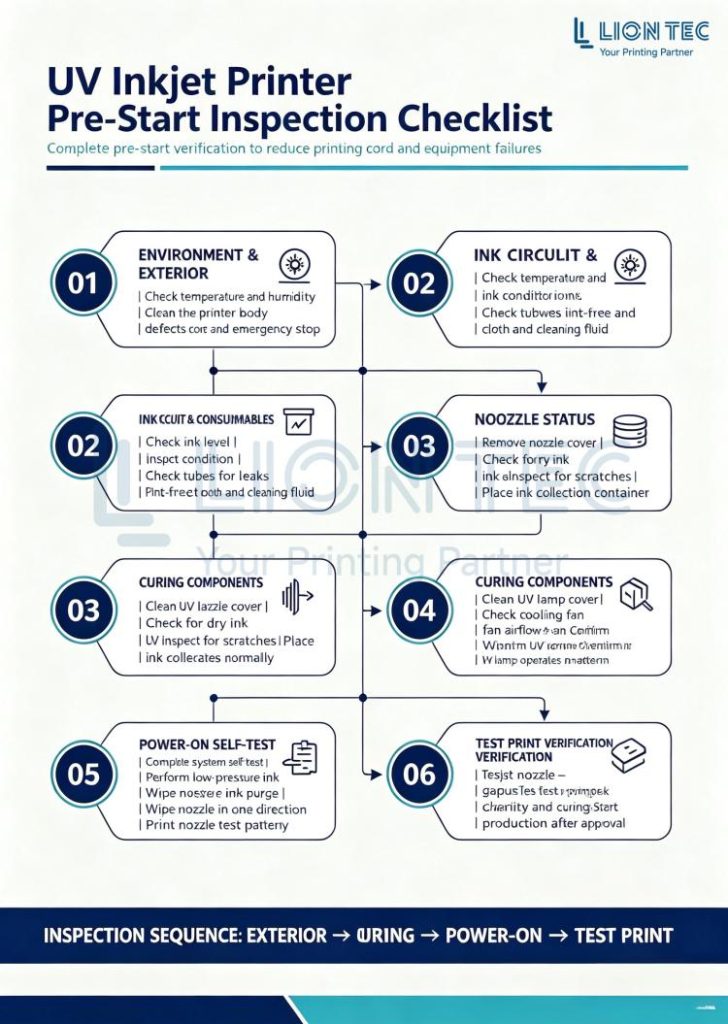
Operation Checklist Procedures
1. Workshop Environment & External Equipment Inspection
① Verify workshop environment: maintain temperature at 18–28°C and relative humidity at 40%–65%. Avoid direct cold air, direct sunlight and heavily dusty areas.
② Clean the UV Coding Machine body, printhead guide rails, waste ink in ink tray, surface dust and residual ink stains.
③ Inspect power cables, signal wires and air pipes for damage, extrusion or loose connectors. Confirm the emergency stop button is reset.
④ Ensure no obstacles in front of the printhead to prevent collision from conveyed products.
2. Ink Circuit System & UV Consumables Inspection
① Check ink levels in main ink tank and sub ink cartridge. Top up with original UV ink of the same model when low. Mixing ink from different brands is prohibited.
② Check ink for delamination, sediment or impurities; replace abnormal ink immediately.
③ Inspect ink tubes, ink dampers and filters for leakage and air bubbles. Ensure pipeline valves are set to correct open/closed status.
④ Prepare special lint-free cloth and UV cleaning liquid. Do not use ordinary paper towels to wipe the printhead.
3. Pre-inspection of Printhead Assembly
① Remove the printhead protective cover and check the nozzle surface for dried ink residue and debris.
② Visually inspect the printhead face for scratches and impact marks.
③ Place an ink-receiving container under the printhead to prevent ink contamination during priming.
4. Curing System & Auxiliary Components Inspection
① Clean dust and ink stains on the shade of the UV curing lamp to avoid blocking ultraviolet light.
② Ensure cooling fan air ducts are unobstructed and free of blockages.
③ For inline production line models, confirm the printhead height adjustment mechanism locks securely.
5. Power-on Self-test & Dynamic Test Inspection
① Switch on the main power and start the control system. Wait for the equipment to complete self-check and watch for fault alarm codes on the interface.
② After preheating finishes, perform low-pressure ink priming to discharge stagnant old ink inside nozzles.
③ Wipe the nozzle gently in one direction with lint-free cloth; reciprocating wiping is forbidden.
④ Print a nozzle test strip and check for complete nozzles with no missing jets or ink splashing.
⑤ Run an idle UV lamp test to confirm normal lighting and stable heat dissipation.
Benefits of Strict Implementation
1. Stabilize printing quality and reduce defective products
Detect hidden risks including clogged printheads, dirty curing lamps, unstable air pressure and abnormal ink pressure in advance. Minimize coding defects such as unrecognizable QR codes, broken characters, insufficient adhesion and sticky surfaces, cutting product rework and scrap loss.
2. Lower risk of unexpected shutdowns and guarantee production line tact time
Shift fault troubleshooting to the pre-start phase. Prevent full-line stagnation caused by sudden failures after the UV Coding Machine runs on the conveyor, reduce production waiting loss and improve overall productivity.
3. Protect precision printheads and control equipment operation & maintenance costs
Timely identify ink leakage, scratch risks from foreign objects and out-of-spec operating environments. Reduce irreversible clogging and scratches on printheads, extend printhead service life and cut expenses on maintenance and spare parts.
4. Standardize operations and reduce reliance on skilled operators
Adopt a unified inspection checklist. New and experienced operators can follow each item for standardized operations. Avoid inconsistent equipment wear caused by different operating habits, and facilitate factories to establish equipment maintenance records.
5. Prevent potential safety hazards of electricity and consumables
Inspect damaged wiring, pipeline leakage, dust and humid workshop conditions beforehand, mitigating safety risks such as short circuits and production line contamination from ink spills.
Conclusion
A rigorous pre-start checklist for the UV Coding Machine is not a cumbersome procedure, but an effective investment to ensure smooth production, control costs and improve printing quality. As a high-tech enterprise deeply engaged in industrial inkjet printing, LIONTEC is consistently committed to providing customers with professional equipment and comprehensive service support, helping clients across various industries achieve more efficient and stable printing and marking operations.