Manufacturers of photovoltaic modules, home appliance panels, and insulated glass have long relied on paper labels or external marking. In harsh conditions including high-temperature lamination, outdoor exposure, high humidity and salt spray, labels peel off and barcodes wear out frequently, breaking product traceability chains. UV Industrial Inkjet Printers deliver a systematic solution for inner-surface marking on glass substrates to solve this pain point.
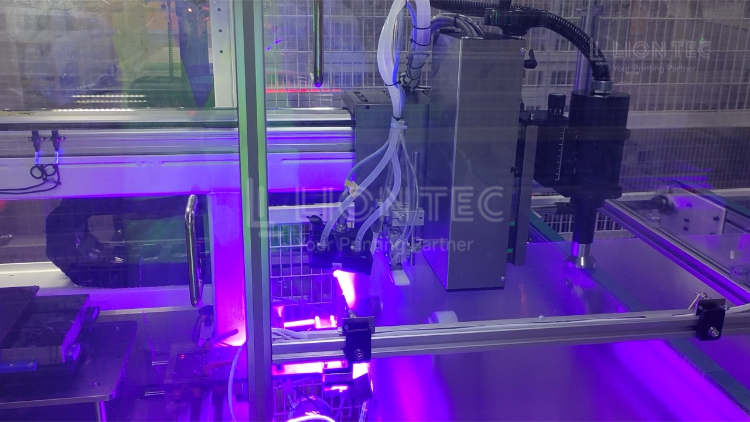
Inner-Surface Marking Process
1. Pre-sample Evaluation & Process Selection Confirmation
With UV Industrial Inkjet Printers, we start by acquiring your actual glass substrate. We confirm the target inner marking side, glass thickness, coating type, production line conveying speed, print content (QR codes / barcodes / characters), and scanner model. We select matched printheads, glass-specific UV nano inks and UV curing light sources. Sample printing is carried out, followed by preliminary adhesion and weather resistance screening tests to validate solution feasibility.
2. Equipment, Tooling & Production Line Integration & Installation
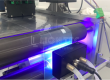
Install industrial UV inkjet printhead modules, LED-UV curing lamps, photoelectric trigger sensors and servo synchronization systems at corresponding production stations. Adjust printhead installation posture and angle dedicated for inner-surface marking to align precisely with the inner working surface of glass. Connect to upstream MES data interfaces, complete debugging for variable data communication, and deploy dust-proof protection to avoid print quality defects caused by floating dust on glass.
3. Glass Substrate Pre-treatment
Before glass arrives at the marking station, floating dust, debris and oil contaminants on the glass inner surface are removed by air knives and clean roller brushes. For special low-surface-energy glass, plasma surface activation treatment is implemented on demand to boost ink wetting performance and adhesion. Residual detergent watermarks are strictly prohibited to prevent pinholes and ink splashing defects.
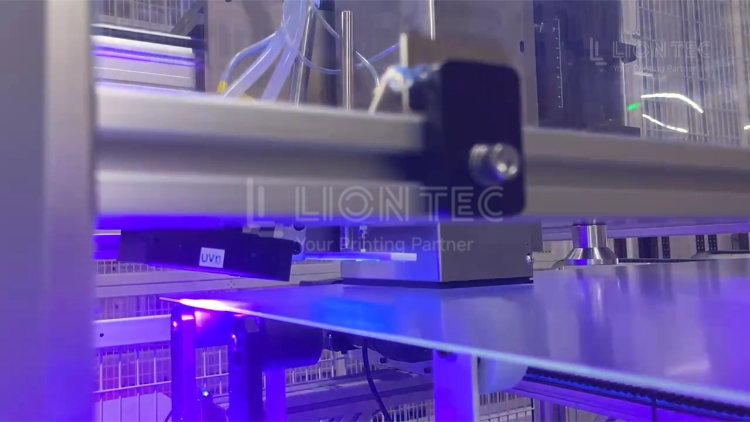
4. Print Parameter Configuration & Mirror Layout
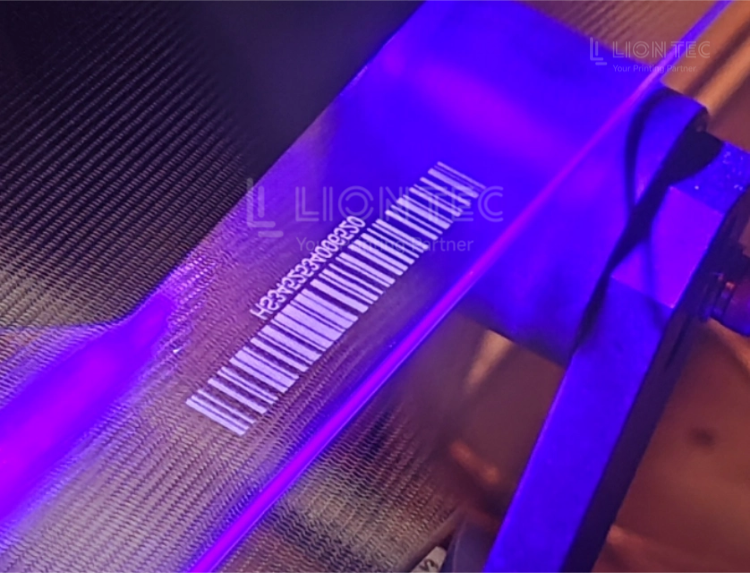
Import print content files into the printing control system. Since the inner marking is read from the outer side of glass, enable mirror layout. Set printhead droplet size, resolution and print width. Activate speed synchronous tracking according to line conveying speed and match UV curing lamp power. Perform offline simulation first to verify the output of variable data.
5. Trial Printing & Effect Verification
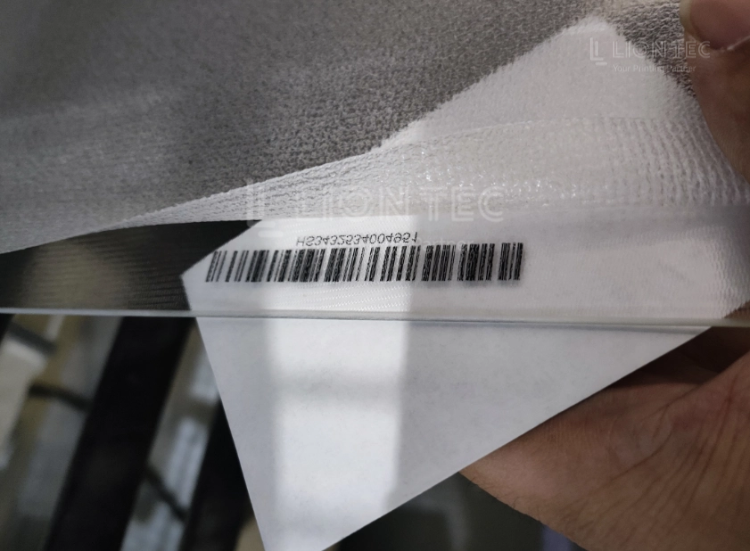
Feed several glass workpieces for trial production. After printing, inspect the integrity of patterns and barcodes from the glass outer surface. Repeatedly scan with barcode readers to verify recognition pass rate. Check ink layer curing status, troubleshoot defects including ink breakage, ink splashing, position offset and pinholes. Iterate and adjust parameters until continuous batches of samples pass all tests.
6. Mass Online Production & In-process Monitoring
Switch to formal production mode after successful trial marking. Glass substrates conveyed on the line are triggered by photoelectric sensors to automatically complete inner-surface marking and instant UV curing. Continuously monitor barcode reading pass rate during production, regularly inspect printhead status, ink level and curing lamp power, and remove defective products.
7. Offline Reliability Sampling Inspection
Take samples per production batch. Carry out adhesion rubbing tests and simplified temperature & humidity resistance validation. Record barcode success rate data and archive process parameters for reuse in future product changeovers.
Advantages of Using UV Industrial Inkjet Printers
- Greatly improved durability & elimination of label failure risks Markings printed by UV Industrial Inkjet Printers are sealed and protected beneath the glass substrate, immune to external friction, water washing, chemical wiping, outdoor UV exposure, and temperature-humidity cycling. Passing DH2000 Double 85 high-temperature & high-humidity test and UV500 UV aging test, the ink layer will not peel off. Its service life matches the full lifecycle of glass products, completely resolving traceability interruptions caused by bubbling, peeling and failure of traditional adhesive labels.
- Simplified production line workflow & lower overall consumable costs It replaces manual labeling operations and eliminates label paper, backing paper and adhesive consumables. It also cuts labor, fixtures and label inventory management at labeling stations. The inline inkjet system runs automatically with production lines, compatible with high-speed assembly lines and reducing rework. In most scenarios, the total marking cost drops by over 85% compared with sticker labeling.
- Flexible variable data output to meet digital traceability requirements The system supports one unique code for each glass piece. Serial numbers, QR codes and batch information can be generated in real time. It connects to MES manufacturing systems with on-the-fly variable data printing. No printing plate replacement is required, delivering cost efficiency even for small-batch and multi-batch orders.
- Preserved outer glass surface & consistent product appearance The outer glass surface remains in its original clean condition with no printing marks or residual adhesive. It does not interfere with subsequent downstream processes such as coating, lamination and encapsulation, improving the visual quality of finished products.
Conclusion
As the requirements for digital traceability in the manufacturing industry continue to upgrade, the inner-surface glass marking technology is expanding from the photovoltaic sector to more fields including home appliances, construction and automotive glass. LIONTEC has been deeply engaged in industrial inkjet marking for years. With our UV Industrial Inkjet Printers, we provide integrated inner-surface glass marking solutions for manufacturers across various industries, covering equipment selection, ink formulation and production line integration.