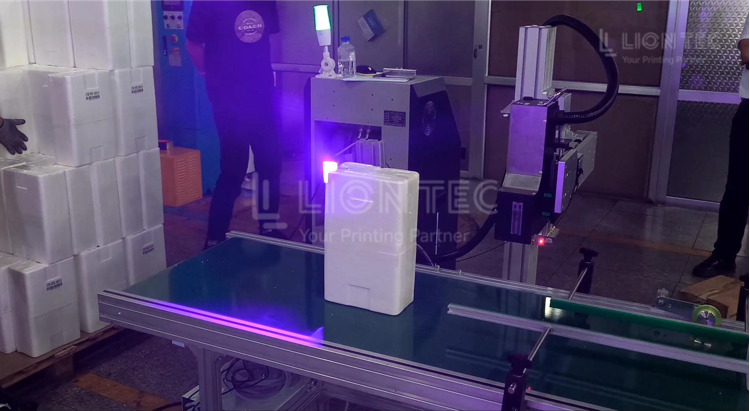
For the UV Industrial Marking Printer, integration with production lines is not as simple as merely purchasing and installing equipment. It is a systematic project involving hardware synchronization, software data intercommunication and working‑condition adaptation. Sufficient requirement assessment and planning will lead to smoother subsequent installation and debugging, as well as more stable production‑line operation.
Steps for Requirement Assessment & Planning
I. Collect coding‑related business requirements and define marking objectives
- Compile all coding‑related requirements Including printable content (production date, QR codes, UDI codes, batch numbers, serial numbers, etc.), printing area size, font precision requirements, workpiece material, daily printing capacity, whether variable‑data printing for one‑item‑one‑code is required, and whether printed content needs to connect to the enterprise MES traceability system.
II. Survey conditions of existing production lines on‑site and collect hardware parameters
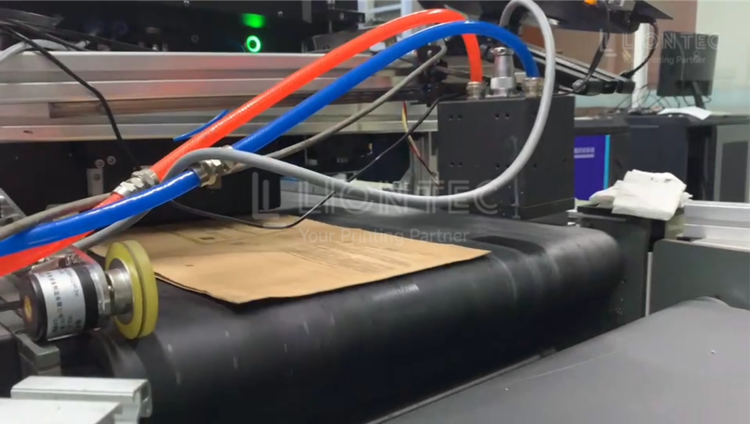
- Record key production‑line parameters item‑by‑item on site Conveyor type (belt conveyor, chain‑plate conveyor, roller conveyor), maximum production‑line running speed, gap between workpieces, conveying‑surface jitter, installable vertical height and horizontal clearance for printheads, workshop power‑supply voltage, on‑site temperature‑humidity, dust and lighting conditions. Meanwhile, confirm whether the production‑line PLC can provide trigger signals for the UV Industrial Marking Printer.
III. Conduct risk assessment and judge solution compatibility
- Perform risk screening based on surveyed data.
- Check whether production‑line speed exceeds the maximum printing speed of the selected UV Industrial Marking Printer.
- Verify whether UV ink adhesion on workpiece materials meets standards; conduct ink sampling printing tests when necessary.
- Check whether the installation position will interfere with existing robotic arms and inspection stations.
- Evaluate whether heat dissipation from the UV curing lamp will affect surrounding products. Mark high‑risk points and provide risk‑avoidance solutions upon completion.
IV. Deliver complete connection planning & implementation solution
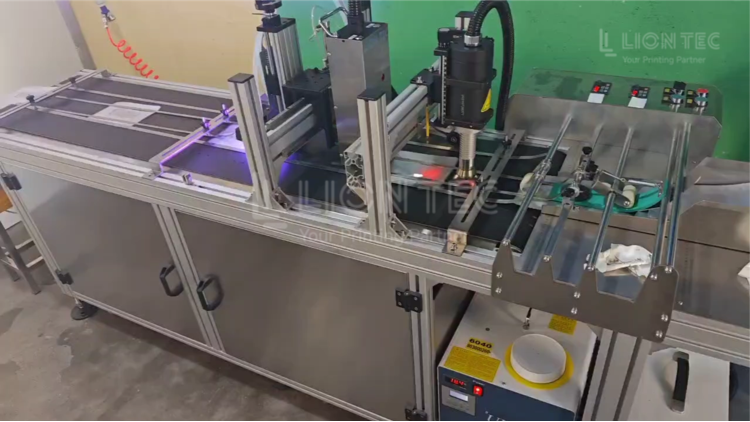
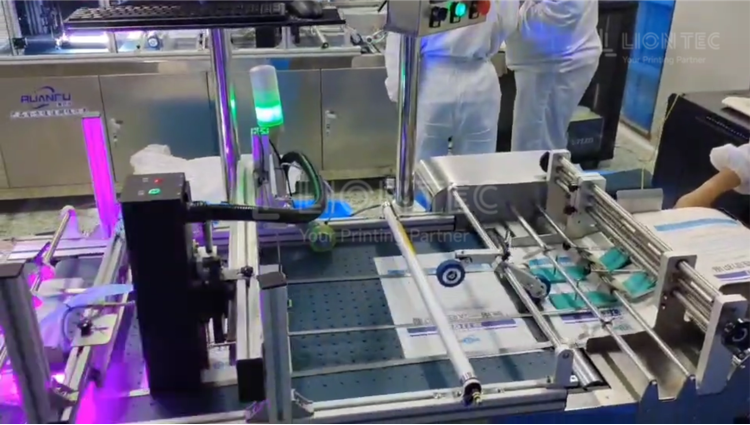
- Draw layout drawings for printheads, UV lamps, photoelectric sensors and mounting brackets; provide signal‑linkage scheme between production line and UV Industrial Marking Printer, electrical wiring list, partial production‑line modification list, MES / traceability‑system docking scheme, equipment arrival cycle, and installation‑commissioning schedule.
V. Review and confirm the solution, finalize with mutual signature
- The equipment supplier submits the full planning solution for joint review by the enterprise’s equipment and production departments. Verify key conditions including production capacity, installation position and downtime‑modification duration. Finalize after confirmation, and take this document as the construction basis for subsequent on‑site deployment of the UV Industrial Marking Printer.
Advantages of Assessment & Planning
- Reduce project‑modification costs and rework waste Complete thorough assessment in the early stage to identify production‑line bottlenecks in advance and accurately define the modification scope. It avoids rework, equipment replacement and secondary assembly‑line modification caused by mismatched working conditions after the UV Industrial Marking Printer is delivered on‑site, greatly saving labor and downtime‑related costs.
- Ensure continuous and stable production of production lines and lower defect rates For the well‑planned linkage solution of the UV Industrial Marking Printer, printing triggering, speed tracking and signal‑interaction logic are pre‑calculated. The marking process keeps pace with the whole assembly line, effectively reducing printing defects such as missing prints, duplicate codes, blurry marks and position offset, thus cutting waste output.
- Facilitate later‑stage maintenance, operation and capacity expansion During the planning phase, reserved space for maintenance, MES system data‑connection interfaces and expansion positions for additional printheads are prepared in advance. When production‑line speed increases, new marking fields are added or the traceability system is upgraded later, the UV Industrial Marking Printer does not require large‑scale re‑modification, delivering higher equipment lifecycle utilization.
- Shorten on‑site commissioning cycle and achieve fast production launch With mature connection plans delivered in advance, installation, wiring and signal debugging for the UV Industrial Marking Printer can be carried out in a clear and orderly manner after equipment arrival. It greatly cuts on‑site commissioning time, reduces production‑line standby downtime, and enables fast launch of inline UV marking production.
Conclusion
LIONTEC delivers full‑process services covering equipment selection, production‑line integration, software development, matching UV ink supplies, on‑site commissioning, and operation‑maintenance training. We are committed to helping every manufacturing enterprise obtain the most suitable solution of UV Industrial Marking Printer for its existing production‑line conditions.