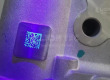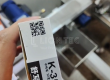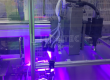
In the field of industrial inkjet printing, UV Ink for Industrial Inkjet Equipment features instant curing, zero VOC emissions and broad substrate compatibility. It has become the mainstream choice for label packaging, electronic components, photovoltaic cell insulation layer printing and many other scenarios. Unlike solvent-based inks and water-based inks, it does not rely on solvent evaporation for drying. Instead, it completes curing and forming through chemical reactions triggered by ultraviolet light.
Ink and Curing Process Optimization
1. Ink Selection and Pre-machine Inspection
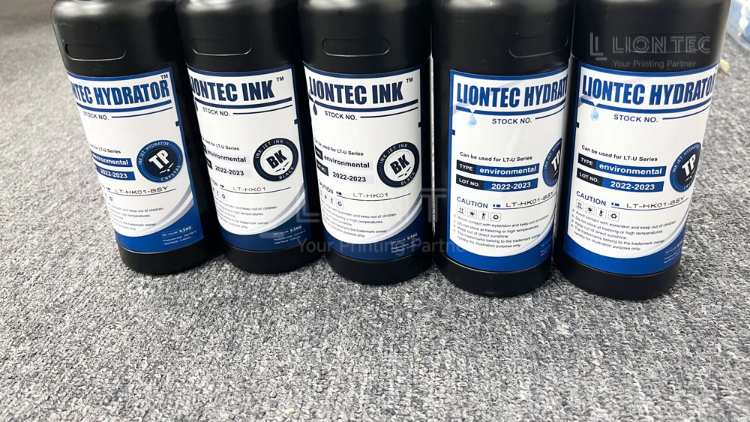
Select the matching system of UV Ink for Industrial Inkjet Equipment according to the substrate type. Check the ink shelf life, shake the ink thoroughly, test ink viscosity and particle indicators, confirm no precipitation or delamination, filter the ink and fill it into the equipment ink circuit system. Verify the compatibility between printhead model and ink to prevent printhead corrosion caused by incompatible ink.
2. Pre-adjustment of Equipment Parameters
Set the printhead firing voltage and firing frequency, adjust the conveyor line speed, configure UV lamp power based on ink curing properties, and reserve an adjustable energy range.
3. Sample Spraying and Basic Printing
Place the test substrate, start the equipment for sample printing to complete pattern ink forming. At this stage, the ink on the substrate surface remains liquid with no curing reaction.
4. UV Irradiation Triggers Curing Reaction
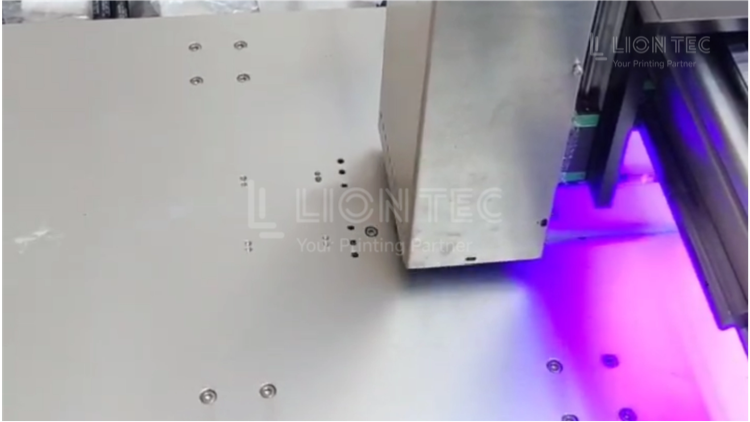
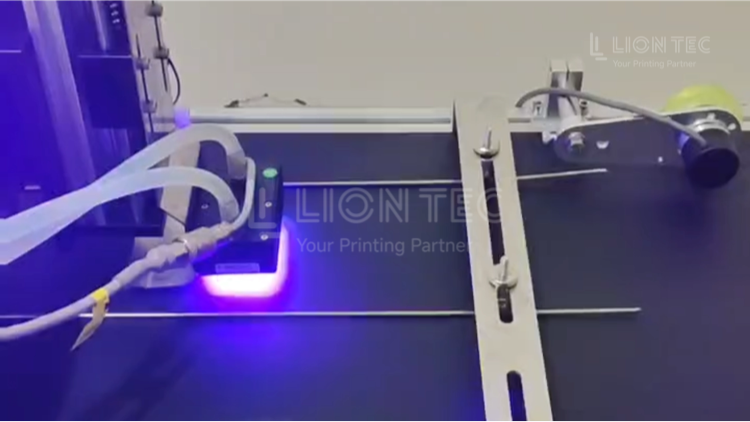
The printed substrate moves to the UV lamp irradiation area along the production line. The UV light source emits ultraviolet light of a specific wavelength. Photoinitiators in UV Ink for Industrial Inkjet Equipment absorb light energy to generate active groups, activate prepolymers and monomers, and trigger cross-linking polymerization reactions.
5. Curing Effect Inspection and Parameter Fine-tuning
Take out the sample plate and check the dryness, adhesion and hardness of the ink layer. If the surface is sticky, increase the UV lamp power or reduce the production line speed. If the ink layer is brittle and cracked, replace it with ink adopting a prepolymer system with better flexibility. Carry out repeated sample verification and start mass production only after stability is confirmed.
6. Continuous Monitoring During Mass Production
Regularly monitor UV lamp attenuation and ink temperature in the mass production phase. Clean the ink circuit and printheads periodically to prevent channel blockage caused by precipitated additives.
Practical Value of Ink and Curing
1. Reduce Printhead Failures and Cut Downtime Losses
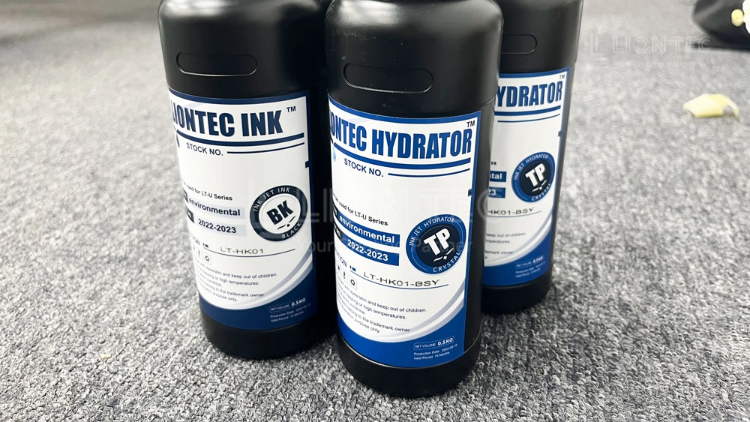
By understanding the component characteristics of UV Ink for Industrial Inkjet Equipment, you can match parameters for LIONTEC printheads in a targeted way, properly control ink viscosity and storage conditions, reduce failures such as precipitation, crystallization and printhead clogging, and lower the frequency of production line shutdown maintenance.
2. Rapid Troubleshooting of Printing Defects
Production defects including sticky ink layers, poor adhesion, ink cracking and color difference are mostly rooted in ink composition and mismatched UV curing energy. Familiarity with curing principles helps quickly identify whether the issue comes from ink formula or improper matching of UV lamp power and conveyor speed, shortening the troubleshooting cycle.
3. Precisely Match Substrates and Improve Finished Product Yield
Different substrates require UV Ink for Industrial Inkjet Equipment with different ratios of resin and monomers. Mastering the composition logic enables customized ink selection according to customer products, optimizes friction resistance and solvent resistance after curing, and raises the yield of printed finished goods.
4. Optimize Production Line Energy Consumption & Productivity
UV curing is an instant curing process. Understanding curing principles allows reasonable adjustment of UV lamp energy to prevent substrate thermal deformation caused by overexposure. While ensuring full curing, it balances line speed and improves the production tempo of the entire production line.
Conclusion
The formulation design and curing process optimization of UV ink are the key link for industrial inkjet printing to move from “being able to print” to “printing well”. As an industrial inkjet solution provider with full-stack capabilities in ink formulation, hardware equipment, control software and process commissioning, LIONTEC always relies on verifiable process data and replicable production line solutions to help customers achieve stable, efficient and eco-friendly printing in scenarios such as label packaging, electronics manufacturing and new energy.